
Porsche

The 911 was meant to be the 901 until Peugeot pointed out that it had claimed three-digit names with a zero in the middle.

2 cars

Filter & Sort

Stock list updated 5 hours ago

Make / Model
Price
–
Year / KMs
–
More Filters

Body

Drive

Fuel

Seats

Cylinders

Paint

Lifestyle

Origin

Discounts

SortJust Arrived (Latest)
Reset all filters

Stuttgart · Gmünd · Le Mans · Melbourne

The Porsche story

From a design office in Stuttgart to an all-electric Taycan: almost a century, told in five minutes.

1931 – 1937

A design office in Stuttgart

Ferdinand Porsche was fifty-five, and already well established, when he opened his own design office in Stuttgart in the middle of the Great Depression. The company was entered in the commercial register on 25 April 1931, and the wages for its first nineteen employees often consisted of room and board.

At first the office worked on commission for other companies. In early 1933 the new Auto Union asked it to design a completely new kind of Grand Prix car, and the Silver Arrow that followed had a sixteen-cylinder engine mounted directly behind the driver.

In 1934 the German Reich Automobile Industry Association asked the office to design and build the Volkswagen, a streamlined four-seater with a four-cylinder boxer engine in the rear. In 1937 the company built its first factory in Zuffenhausen, the Stuttgart district that is still its home.
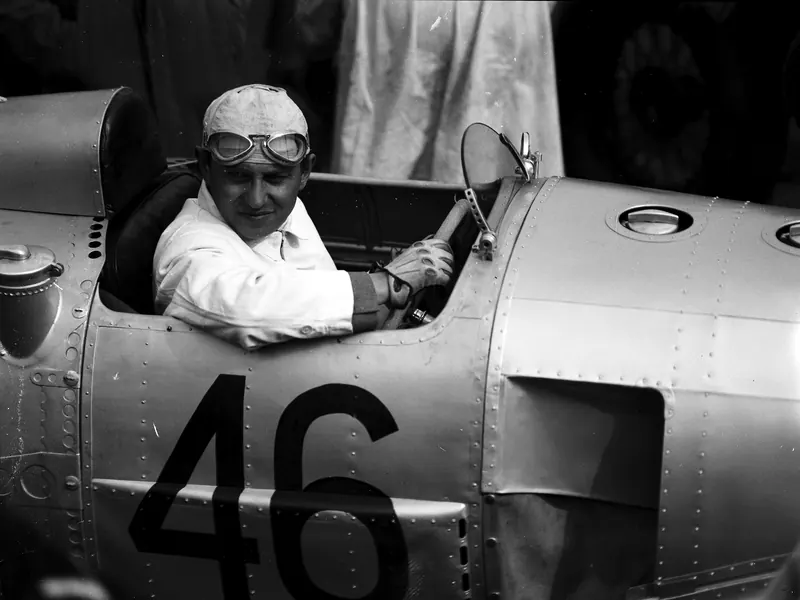
August Momberger at the wheel of a silver Auto Union Type A racing car, number 46, in 1934
August Momberger in an Auto Union Type A at the AVUS, Berlin, 1934Willy Pragher, Landesarchiv Baden-Württemberg · CC BY 3.0

1944 – 1950

The first Porsche, built in Austria

In the middle of the war the company moved from Stuttgart to Gmünd, in the Austrian province of Carinthia, away from the bombing raids, and worked in the buildings of a former sawmill. Ferdinand Porsche was interned by the French from December 1945, and his son Ferry kept the company going.

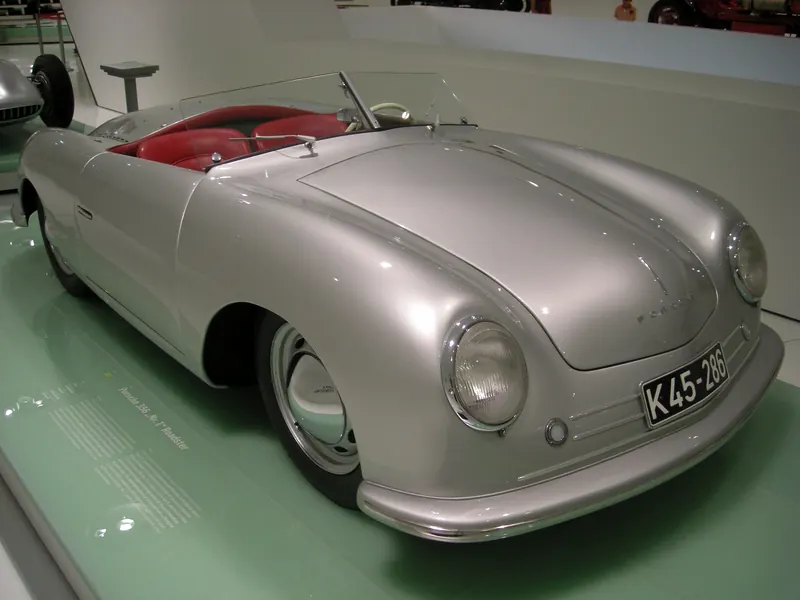
Ferry Porsche later put it simply: "In the beginning, I looked around and could not find quite the car I dreamed of. So I decided to build it myself." A contract for the Italian race car maker Cisitalia paid for it, and on 8 June 1948 the 356 "No. 1" Roadster, an aluminium body on a steel tube frame with Volkswagen mechanicals, received its operating permit.

That date is generally considered the birth of the Porsche brand. The No. 1 stayed a one-off: Porsche returned to Stuttgart in November 1949, and the 356 went into series production in Zuffenhausen in March 1950. Ferry had expected to sell around 500; just under 78,000 were built up to 1965.

The silver 1948 Porsche 356 No. 1 Roadster with red seats, on display in a museum
The 356 "No. 1" Roadster at the Porsche Museum, StuttgartMichael Barera · CC BY-SA 4.0

1963 – 2017

From 901 to 911

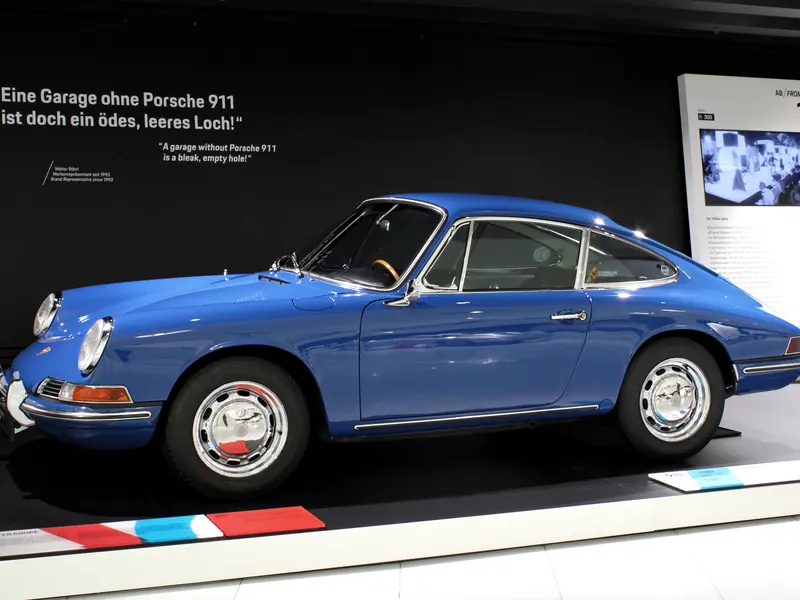
The successor to the 356 was shown at the 1963 Frankfurt Motor Show as the 901: a low silhouette, a six-cylinder engine at the rear and an agile chassis. It was designed by Ferdinand Alexander Porsche, Ferry's son and the founder's grandson.

Then the name ran into trouble. Peugeot had a trademark on number sequences with a zero in the middle, so after production of the 901 began on 14 September 1964, Porsche renamed its new car the 911. The first one made 130 PS and, Porsche says, was good for 210 km/h.

The 911 Targa, with its stainless steel roll-over bar, followed in 1965. The one millionth 911 rolled off the production line in 2017.

A blue 1964 Porsche 911 2.0 Coupé in profile at the Porsche Museum
A 1964 Porsche 911 2.0 Coupé at the Porsche MuseumAlexander Migl · CC BY-SA 4.0

1951 – 2017

Racing, and Le Mans

Porsche went racing early. A 356 SL won its class on the company's Le Mans debut in 1951, and in 1953 two Porsche 550s took first and second in the 1.5-litre class. In 1956 Porsche won the Targa Florio for the first time.

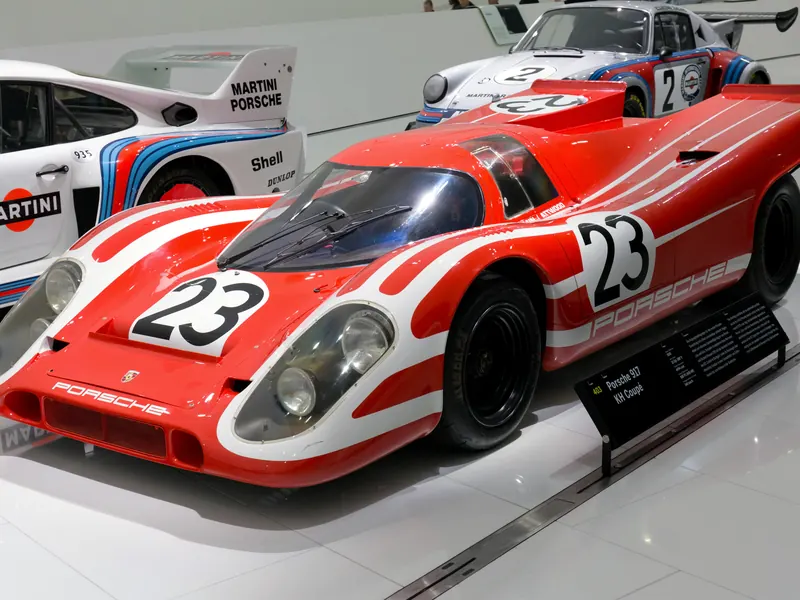
The outright win took until 1970. Hans Herrmann and Richard Attwood won that year's 24 Hours in a 917, the first Porsche to win at Le Mans, and only two of the seven 917s that started finished, in first and second place.

A year later a 917 covered 5,335 kilometres in the 24 hours, a distance record that stood for nearly forty years. Porsche's 19th overall win came in 2017, the third in a row, in the 919 Hybrid.

The red and white number 23 Porsche 917 KH of the Porsche KG Salzburg team, on display in a museum
The 917 KH that won the 1970 24 Hours of Le Mans, at the Porsche MuseumMorio · CC BY-SA 3.0

1991 – 1996

Out of a crisis, with the Boxster

The early 1990s were a very difficult time for Porsche. Sales fell, four separate model lines made the cars too costly to build, and the company even became a takeover target. In 1992/93 it sold only 14,362 cars.

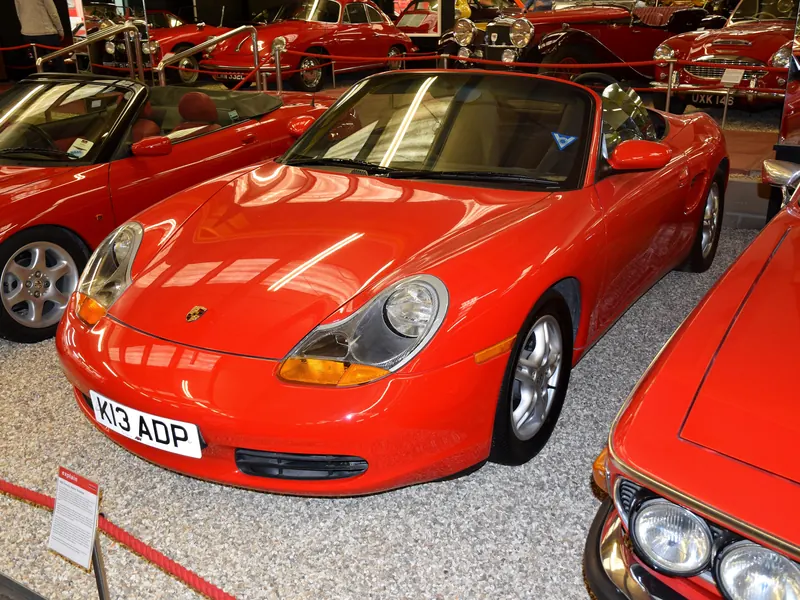
New management under Wendelin Wiedeking cut costs and changed how the cars were built. The Boxster, a mid-engined two-seat roadster priced below the 911, was shown as a concept in Detroit in January 1993 and went into production in 1996. Porsche says it marked a turning point in the company's fortunes.

To keep costs down, the first Boxster shared its front end, doors and many other parts with the 911 that followed in 1997. The one millionth Porsche rolled off the line in Zuffenhausen on 15 July 1996.

A red 1998 Porsche Boxster roadster parked in a motor museum
A 1998 Porsche Boxster at the Haynes International Motor Museum, SparkfordHugh Llewelyn · CC BY-SA 2.0

1997 – 2019

A bigger family

By the end of the 1990s Porsche had decided that the 911 and the Boxster alone would not secure its future. It chose a premium SUV and built it with Volkswagen: under the project name Colorado, the Porsche Cayenne and the Volkswagen Touareg were to share a platform that Porsche developed.

The Cayenne, Porsche's first four-door model, went into production in 2002, the year the new Leipzig plant opened. The Panamera followed in 2009 and the Macan in 2013, and the one millionth Cayenne was built eighteen years later.

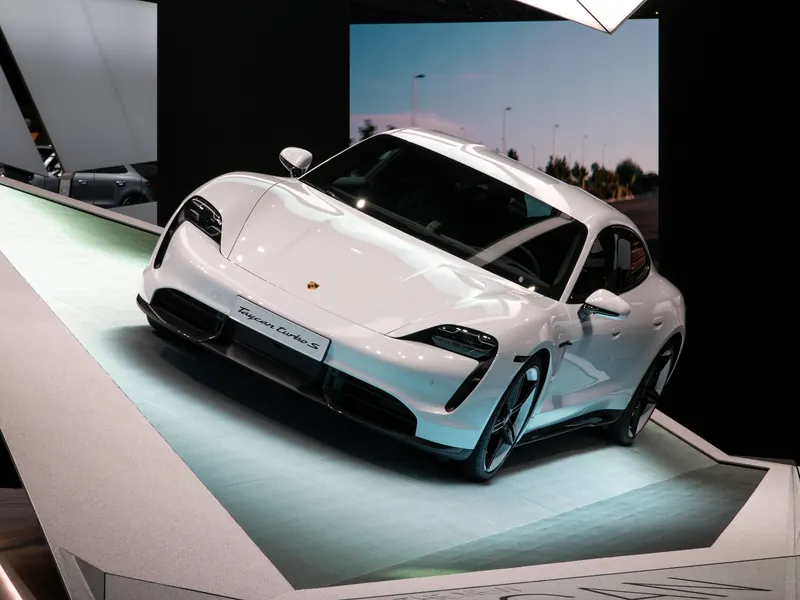
The Mission E concept of 2015 marked Porsche's entry into electric mobility, and on 4 September 2019 the Taycan, the first all-electric Porsche, was unveiled worldwide.

A white Porsche Taycan on a display ramp at a motor show
The Porsche Taycan at the IAA motor show, 2019Johannes Maximilian · CC BY-SA 4.0

1931 – today

Who owned Porsche?

Ferdinand Porsche designed the first Beetle, and since 2012 Porsche has been part of Volkswagen. The ownership chart in between has more turns than a mountain pass.

  1. 1931
    Dr. Ing. h.c. F. Porsche GmbH

    Ferdinand Porsche's Stuttgart design office is entered in the commercial register on 25 April.

  2. 1947
    Porsche Konstruktionen GesmbH

    Louise Piëch and Ferry Porsche set up an Austrian company in Gmünd on 1 April, while their father is still detained in France.

  3. 1948
    Volkswagen agreement

    Ferry Porsche settles terms with Volkswagen's Heinrich Nordhoff: a licence fee on every Beetle, approval to build the 356, and the right to import Volkswagens into Austria.

  4. 1969
    VW-Porsche

    The two companies build the 914 together: a Volkswagen engine in the 914, a Porsche engine in the 914-6.

  5. 1972
    Porsche AG

    The family firm becomes a corporation, and the Porsche and Piëch families decide to stop filling management posts with family members.

  6. 1993
    Wendelin Wiedeking

    Spokesman for the board since September 1992, he becomes its chairman in August 1993, in the middle of the crisis.

  7. 2007
    Porsche SE

    The old Porsche AG is renamed Porsche Automobil Holding SE, and a new Porsche AG is created for the car business.

  8. 2009
    Volkswagen steps in

    After Porsche tries to take over Volkswagen and runs up huge debts, the two agree to combine, and Volkswagen is to take 49.9 percent of Porsche AG by the end of the year.

  9. 2012
    Volkswagen

    Volkswagen buys the rest. It owns Porsche AG in full from 1 August.

  10. 2022
    Porsche AG lists

    Porsche AG floats on the Frankfurt Stock Exchange on 29 September. Volkswagen remains its owner, and Porsche SE holds a controlling stake in Volkswagen.

1951 – today

Porsche in Australia

Porsche came to Australia through one Melbourne man. In 1951 Norman Hamilton, a pump distributor on a research trip to Europe, followed a Porsche tester to the factory and came away with the Australian and New Zealand rights on a handshake. He became only the second Porsche agent outside Europe, after Max Hoffman in the United States.

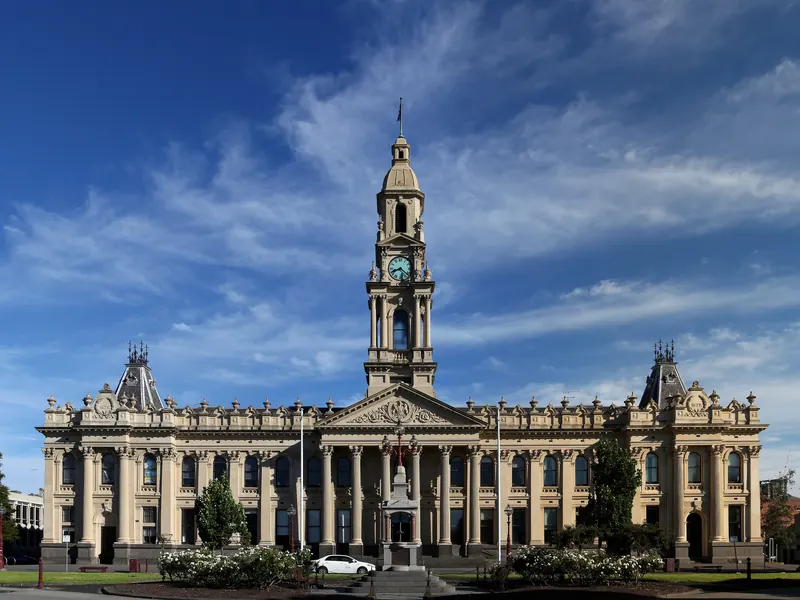
His first two cars, a 356 Cabriolet and a 356 Coupé, were shown to celebrities and motor racing identities at South Melbourne Town Hall on 1 November 1951. Australia became Porsche's second export territory outside Europe and its first right-hand-drive market. Sales started slowly: just one more car arrived in 1952, and the tally grew to 84 in 1959.

Hamilton's son Alan won the 1966 Australian Hillclimb Championship, Porsche's first Australian national title, and took over the company in 1972. Porsche AG took control of its Australian operations in 1992, and from 2003 Porsche Carrera Cup Australia supported the V8 Supercars Championship.

The cream stone South Melbourne Town Hall and its clock tower under a blue sky
South Melbourne Town Hall, where the first two Porsches were shown in 1951Donaldytong · CC BY-SA 3.0

Myth or fact?

Three things people get wrong

Open a card for the fact.

MythPorsche was founded in 1948.Tap for the fact
Fact

The first Porsche car received its operating permit on 8 June 1948, a date generally considered the birth of the Porsche brand. But Ferdinand Porsche's design office was entered in the commercial register on 25 April 1931, seventeen years earlier.

MythFerdinand Porsche designed the 911.Tap for the fact
Fact

The 911 was designed by his grandson, Ferdinand Alexander Porsche. The founder died in January 1951, twelve years before the 901 was shown at Frankfurt in 1963.

MythThe Cayenne saved Porsche from going under.Tap for the fact
Fact

Porsche's own account puts the turning point at the 1996 Boxster. The Cayenne followed in 2002 to grow the company beyond sports cars, although one Porsche article does credit it with rescuing the company from a crisis.

By the numbers

Porsche in four figures

1931
the year Ferdinand Porsche's design office was entered in the Stuttgart commercial register
135 km/h
top speed of the first Porsche, the 356 "No. 1" Roadster, in 1948
19
overall Le Mans wins by 2017, the first in 1970
1,000,000
911s built by 2017, the year the millionth rolled off the line