

Mazda

The company name honours Ahura Mazda, the Zoroastrian lord of wisdom, and conveniently echoes the surname of founder Jujiro Matsuda.

5 cars

Filter & Sort

Stock list updated 5 hours ago

Make / Model
Price
–
Year / KMs
–
More Filters

Body

Drive

Fuel

Seats

Cylinders

Paint

Lifestyle

Origin

Discounts

SortJust Arrived (Latest)
Reset all filters
2018 Mazda CX-5 KF2W7A Maxx Sport Wagon 5dr SKYACTIV-Drive 6sp FWD 2.0i – #1056
2018 Mazda CX-5
$18,500
2022 Mazda 3 BP2SLA G25 GT Sedan 4dr SKYACTIV-Drive 6sp 2.5i – #1045
2022 Mazda 3
$25,800
2023 Mazda CX-5 KF4WLA G35 GT SP Wagon 5dr SKYACTIV-Drive 6sp i-ACTIV AWD 2.5T – #1020
2023 Mazda CX-5
$35,800 $36,800
Coming soon
2021 Mazda 3
68,850 km
Coming soon
2012 Mazda 3
160,000 km

The Mazda story

The Mazda story: the one-minute overview, narrated by Michi1:04

1920 – 1927

A cork factory in Hiroshima

Mazda began in 1920 in Hiroshima as Toyo Cork Kogyo, a cork manufacturer. The firm was ailing, and in 1921 Jujiro Matsuda took charge, developing compressed cork board and getting production on track.

Matsuda was born in Hiroshima in 1875, the youngest of 12 children. He left for Osaka at 13 to work with a blacksmith, and at 31 he set up his own workshop in a rented cowshed and went on to introduce the Matsuda Pump.

In 1925 a fire destroyed much of the cork factory. Matsuda decided to return to the machine industry, which he knew best, and in 1927 the company dropped the word cork from its name and became Toyo Kogyo.
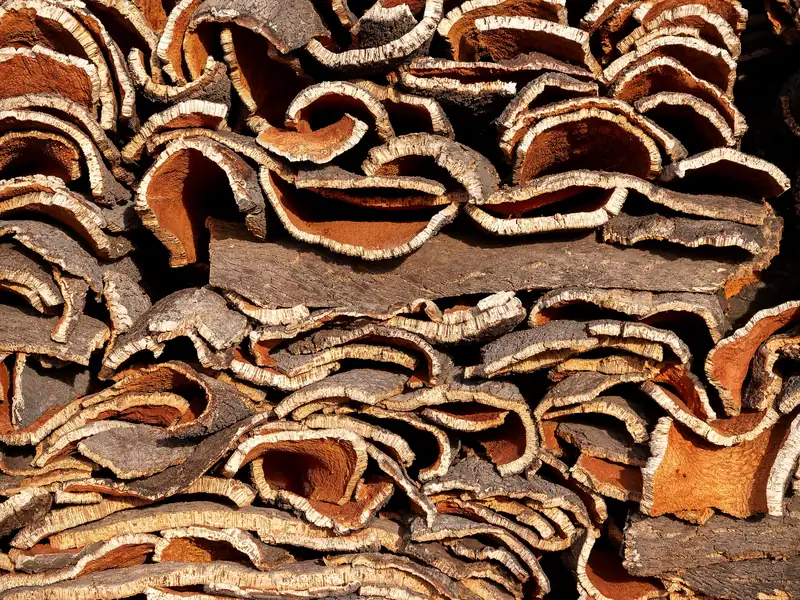
Curled slabs of cork oak bark stacked in layers in Portugal
Stacked cork oak bark, Ponte de Sor, PortugalJules Verne Times Two · CC BY-SA 4.0

1931 – 1936

Three wheels and a name

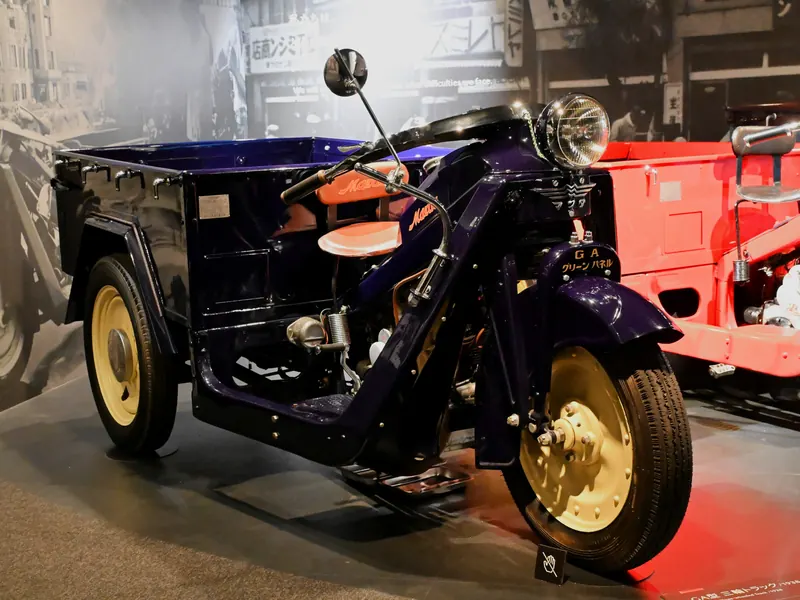
In 1931 Toyo Kogyo unveiled its first vehicle, a three-wheeled truck called the Mazda-Go. That year it also built a new plant in Fuchu Village and moved its headquarters there from Hiroshima City.

The name Mazda was born with that truck. Candidates such as Sumera-Go and Tenshi-Go were swept aside in favour of a name honouring the family name of company president Jujiro Matsuda. Mazda says it was also associated with Ahura Mazda, the God of Light, in the hope of brightening the image of these compact vehicles.

Matsuda insisted on making as many parts as possible in-house, and the engine was built by the company itself. In 1936 five Mazda-Go trucks drove from Kagoshima to Tokyo to show off their reliability, covering more than 2,700 kilometres in 25 days.

A dark blue 1938 Mazda Type GA three-wheeled truck with a single front wheel and an open load tray
A 1938 Mazda Type GA three-wheeled truckTTTNIS · CC0

1945 – 1960

Rebuilding, then a first car

Hiroshima was devastated by the atomic bomb in 1945, but Toyo Kogyo's facilities suffered only minimal damage. Mazda says the company worked to resume production while helping the city's recovery, giving relief to victims and letting government offices operate from its premises. Its Australian site adds that assembly restarted within four months.

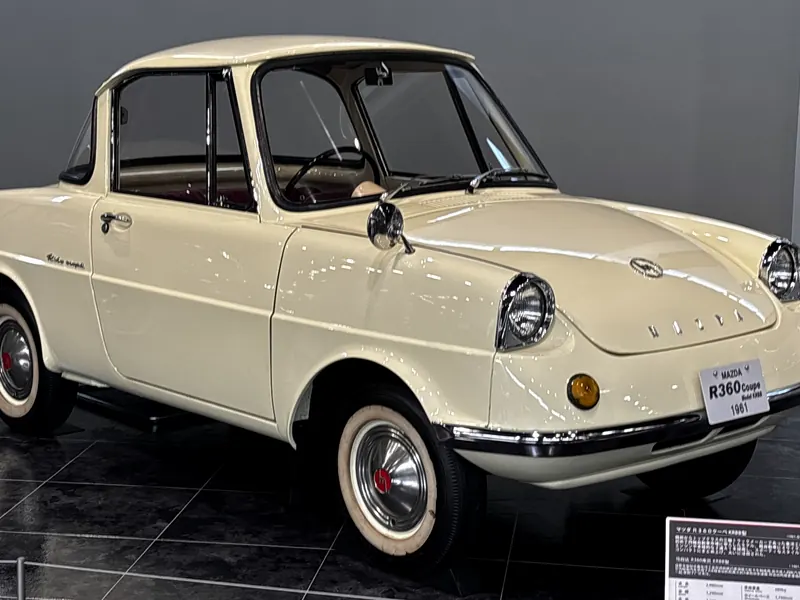
In 1950 Mazda began selling the Type-CA one-tonne truck, powered by a 1,157 cc engine. From there it went on to build passenger vehicles, and in 1960 the R360 Coupe, Mazda's very first passenger vehicle, rolled off the assembly line.

A cream Mazda R360 Coupe, a small two-door microcar, on display in a showroom
A Mazda R360 Coupe, the company's first passenger carOq10pass · CC0

1961 – 1978

The dream engine

Mazda began developing the rotary engine in 1961, and for the next six years it brought nothing but problems and setbacks. The worst were chatter marks inside the rotor housing, which Mazda's engineers called nail marks of the Devil. They beat them with seals made of high-strength carbon infused with aluminium.

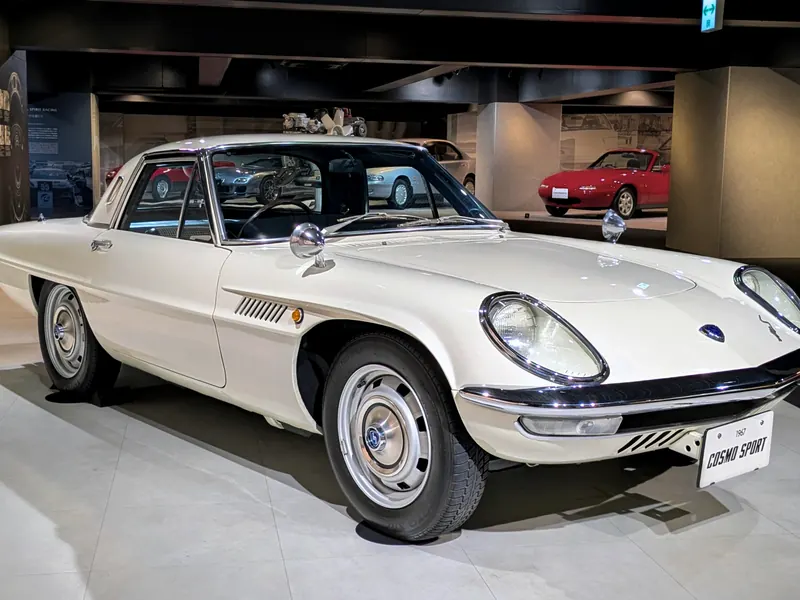
The Cosmo Sport went on sale on 30 May 1967. Mazda calls it the world's first volume production sports car powered by a two-rotor rotary engine: two 491 cc rotors, 110 PS and a top speed of 185 kilometres an hour.

Rotary power was the heart of Mazda's strategy, but the 1973 oil crisis exposed its weakness, fuel consumption. Sales plummeted, and in 1975 Toyo Kogyo made a huge loss, the first in its history. The rotary lived on in sports cars, starting with the RX-7 in 1978.

A white Mazda Cosmo Sport coupe with a low, rounded nose, on display in a museum
A Mazda Cosmo Sport at the Mazda Museum, HiroshimaAos.1905 · CC BY 4.0

1983 – 2016

Horse and rider as one

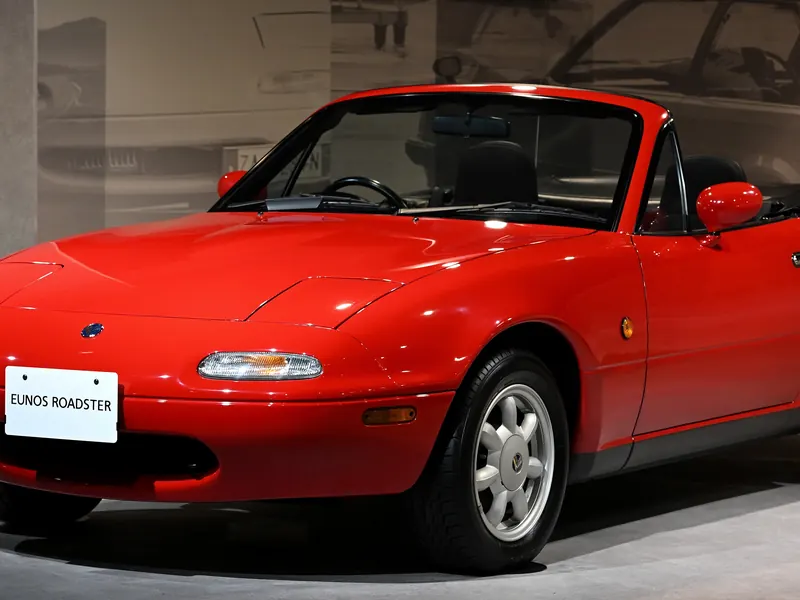
Mazda began deliberating on a lightweight sports car in 1983 and unveiled the MX-5 Miata at the Chicago show in February 1989. Mass production started at Ujina Plant No. 1 in Hiroshima that April.

Its guiding idea has a name: jinba ittai, horse and rider as one. Mazda's Australian site says the phrase was first coined during the MX-5's development and has applied to every Mazda model since.

On 22 April 2016 Mazda built its one-millionth MX-5, a milestone it put down to the strong support of fans around the world. Mazda said then that the car had held the Guinness World Record for the best-selling open-top two-seater sports car for many years.

A red 1989 Eunos Roadster, the Japanese-market MX-5, on display with its roof down
A 1989 Eunos Roadster, the first MX-5 as sold in JapanTTTNIS · CC0

1970 – 1991

Winning Le Mans

Mazda's Le Mans story began in 1970, when it supplied an engine to a private Belgian team. Its first finish came in 1982, in 14th place, and in 1983 its dealer team became Mazdaspeed, a factory team under Mazda.

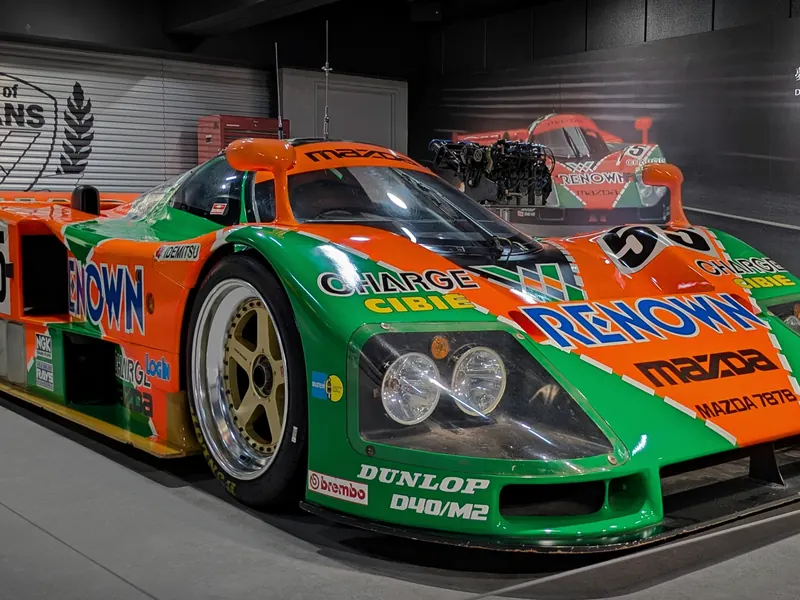
In 1991 the Mazda 787B won the 24 Hours of Le Mans outright. Mazda became the first rotary engine manufacturer in the world, and the first Japanese manufacturer, to take overall victory in the race.

The car weighed just 830 kilograms, and its four-rotor engine made around 700 horsepower. Volker Weidler, Johnny Herbert and Bertrand Gachot drove it to the win.

The orange and green Mazda 787B racing car, number 55, on display in the Mazda Museum
The Mazda 787B, number 55, at the Mazda Museum, HiroshimaAos.1905 · CC BY 4.0

1920 – today

Who owned Mazda?

From a founding family to a rescuing bank, Ford and Toyota: Mazda's story is also about who stood beside it.

  1. 1920
    Toyo Cork Kogyo

    A cork manufacturer in Hiroshima. Jujiro Matsuda takes over as president in 1921.

  2. 1927
    Toyo Kogyo

    After the fire, the company drops cork from its name and turns to machinery.

  3. 1951
    Tsuneji Matsuda

    Jujiro's son becomes the third president.

  4. 1975
    Sumitomo Bank

    After the company's first ever loss, its main bank steps in and puts its own people on the board.

  5. 1979
    Ford

    A capital alliance begins. Ford holds about a quarter of the shares and is the largest single shareholder.

  6. 1984
    Mazda Motor Corporation

    The company takes its best-known brand name as its own.

  7. 1996
    Ford takes control

    Ford lifts its stake from 25% to 33.4%, and Mazda gets its first non-Japanese president and CEO.

  8. 2008
    Ford steps back

    After the collapse of Lehman Brothers, Ford starts selling its shares, ending 12 years of managing the company.

  9. 2015
    Ford exits

    Ford sells its remaining 2.1% stake, ending a holding that began in 1979.

  10. 2017
    Toyota

    A business and capital alliance gives Toyota a stake of about 5%.

1959 – today

Mazda in Australia

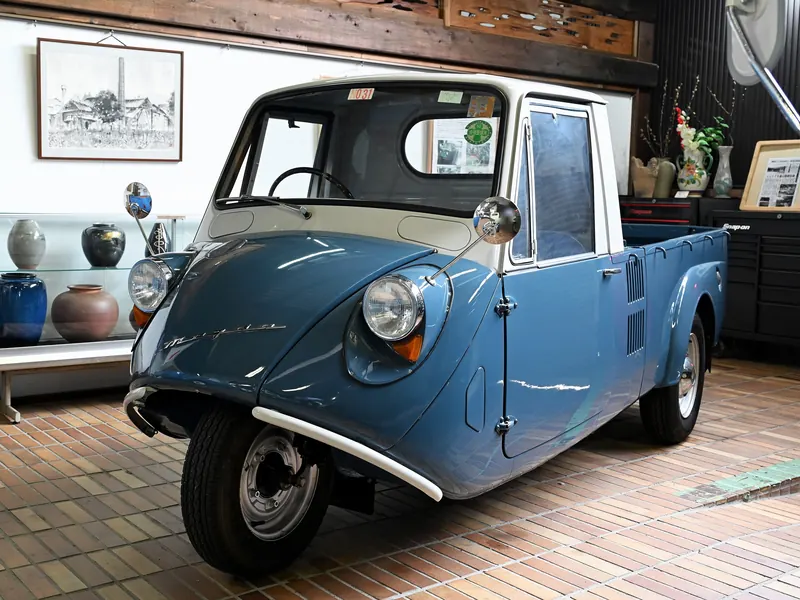
Among Australia's ten best-selling brands, Mazda is the only one that started here with a three-wheeler, CarExpert noted in 2025: the T600 truck, first imported in 1959. By the late 1960s it was selling more than 10,000 vehicles a year.

The rotary found a market too. In 1973 Mazda sold 6,218 rotary-powered vehicles in Australia, according to a WhichCar retrospective, and a Capella RE won its class at Bathurst that year. In 1995 Dick Johnson and John Bowe won the last 12-hour race at Eastern Creek in the RX-7 SP, which Mazda Australia developed locally.

Mazda Australia opened a purpose-built national headquarters in Mulgrave, in Melbourne's south-east, in 2016. The CX-5, launched in 2012, was Australia's favourite mid-size SUV for seven years running, and Mazda Australia says more than 330,000 CX-5s have called Australia home.

A blue and white 1964 Mazda T600 three-wheeled pickup with a single round headlight, on display
A 1964 Mazda T600, the model first imported to Australia in 1959TTTNIS · CC0

Myth or fact?

Three things people get wrong

Open a card for the fact.

MythFord owns Mazda.Tap for the fact
Fact

Ford took a controlling 33.4% in 1996 and managed the company for 12 years, but it began selling after the 2008 financial crisis and sold its last 2.1% in 2015. Toyota bought a stake of about 5% in 2017.

MythMazda invented the rotary engine.Tap for the fact
Fact

German engineer Felix Wankel developed it with NSU. Toyo Kogyo took out a licence from NSU in July 1961, then spent six years on problems and setbacks of its own before the Cosmo Sport went on sale.

MythMazda is named after a god, not a man.Tap for the fact
Fact

Mazda says the first truck was named in honour of president Jujiro Matsuda's family name. The name was also associated with Ahura Mazda, the God of Light, so it is both.

By the numbers

Mazda in four figures

1920
Toyo Cork Kogyo founded in Hiroshima
2,700 km
and more: the 1936 Mazda-Go caravan from Kagoshima to Tokyo, in 25 days
830 kg
the weight of the 787B that won Le Mans in 1991
1,000,000
MX-5s built by April 2016