
Nissan

Datsun began as DAT, formed from the initials of three early backers, with the smaller model called son of DAT.

1 car

Filter & Sort

Stock list updated 5 hours ago

Make / Model
Price
–
Year / KMs
–
More Filters

Body

Drive

Fuel

Seats

Cylinders

Paint

Lifestyle

Origin

Discounts

SortJust Arrived (Latest)
Reset all filters

Tokyo · Yokohama · Clayton · Bathurst

The Nissan story

From a Tokyo workshop to the electric Leaf: more than a century, told in five minutes.

1911 – 1932

Three initials and a small car

Masujiro Hashimoto founded the Kwaishinsha Motor Car Works in Tokyo's Hiroo district in 1911. It was a small workshop with big dreams.

Three years later it built a small passenger car with a twin-cylinder engine that could reach 32 kilometres an hour. Hashimoto called it the DAT, borrowing the initials of the three men who had invested in the company: Den, Aoyama and Takeuchi.

In 1931 the company developed a smaller passenger car and called it Datson, meaning son of DAT. Son is the Japanese word for loss, so the name was changed to Datsun, because sun has brighter associations.
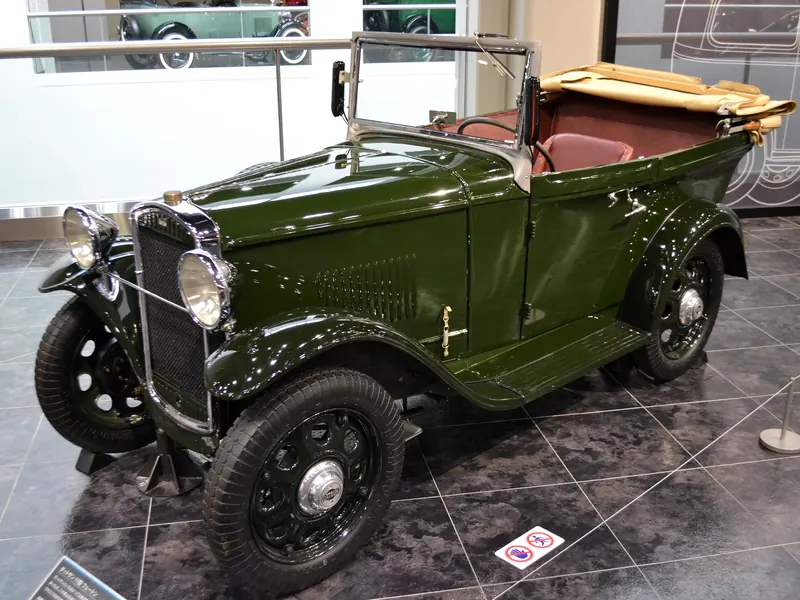
A dark green open-top Datsun Model 11 Phaeton from 1932 on display in a museum
A Datsun Model 11 Phaeton from 1932先従隗始 · CC0

1928 – 1955

Enter Nissan

In 1928 Yoshisuke Aikawa became president of Nihon Sangyo, the company from which the name Nissan originated. The name began as an abbreviation of Nihon Sangyo, often translated as Japan Industries, used on the Tokyo Stock Exchange.

Aikawa's parts company, Tobata Casting, took DAT Jidosha Seizo on as a subsidiary in 1931. On 26 December 1933 his holding companies set up a car company, Jidosha Seizo, in Yokohama, and in June 1934 it was renamed Nissan Motor Co., Ltd.

After the war, Japan's car makers were allowed to build cars again. In 1952 Nissan signed a technical cooperation agreement with Britain's Austin Motor Co., and in 1955 it rolled out the Datsun Sedan, which Nissan calls the first all-new postwar passenger car.

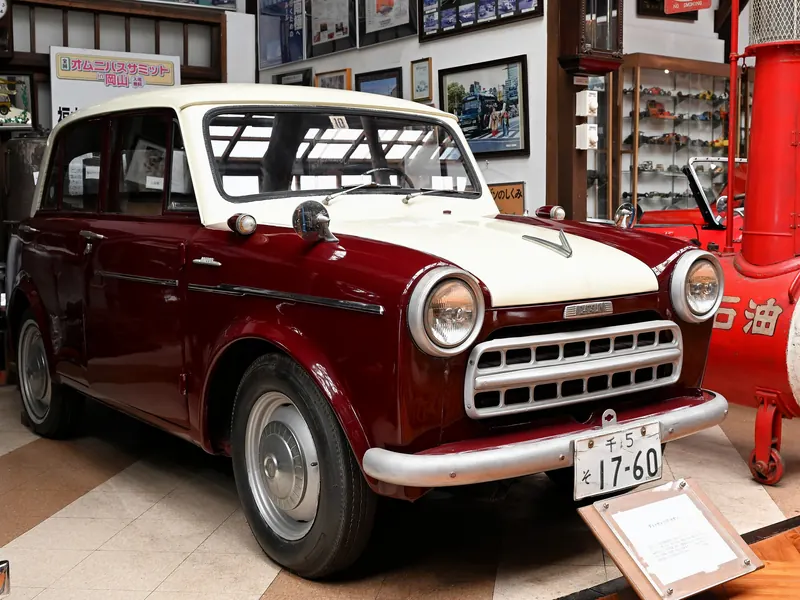
A maroon and cream Datsun Sedan with a chrome grille, on display in a museum
A Datsun Sedan (Type 113), an updated version of the 1955 originalTTTNIS · CC0

1957 – 1969

The Skyline joins the family

The Skyline was not born a Nissan. Nissan's own history says the Prince Skyline was launched in 1957 by Fuji Precision Machinery, the predecessor of Prince Motors.

In 1966, as part of an industry reorganisation by Japan's trade ministry, Prince Motors merged with Nissan. The move brought the Skyline and the Gloria into Nissan's lineup.

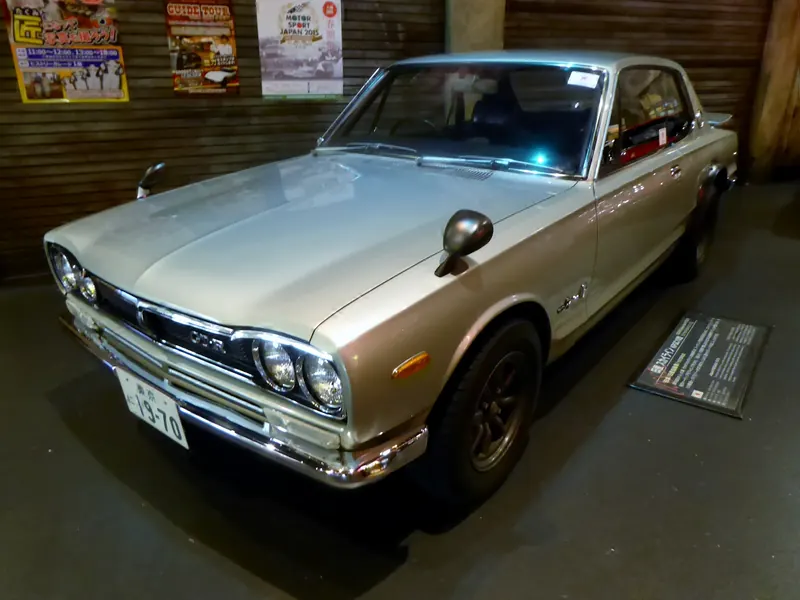
In February 1969 the Skyline 2000GT-R arrived. Nissan lists its four-valve DOHC engine as a world first in a mass-produced vehicle.

A silver 1970 Nissan Skyline 2000GT-R coupe photographed from the front
A 1970 Nissan Skyline 2000GT-RTokumeigakarinoaoshima · CC0

1969 – 1978

The Z car

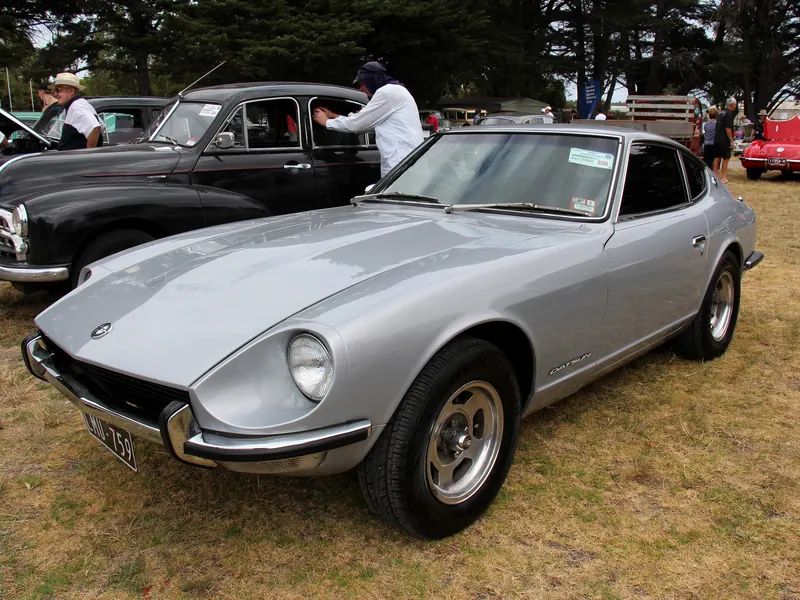
The Fairlady Z arrived in 1969. In Japan it was the Nissan Fairlady Z, and for export it was badged the Datsun 240Z, followed by the 260Z and 280Z. Nissan says global sales of the first generation passed 520,000.

It was conceived by Yutaka Katayama, then president of Nissan Motor Corporation U.S.A., and designed by a team led by Yoshihiko Matsuo. It had independent suspension on all four wheels and an overhead-cam straight-six engine, features then associated with far more expensive European sports cars.

It was a rally car too. Datsun 240Zs took the top two places in the 1971 East African Safari, and in 1973 Shekhar Mehta won the 21st Safari Rally in one.

A silver 1972 Datsun 240Z coupe parked on grass at a car show
A 1972 Datsun 240ZSicnag · CC BY 2.0

1981 – 1989

Datsun becomes Nissan

In July 1981 Nissan decided to use one brand name, Nissan, in its overseas markets. Its US factory built its first Datsun truck in June 1983 and its first Sentra in March 1985, and by March 1986 the Datsun brand had been phased out.

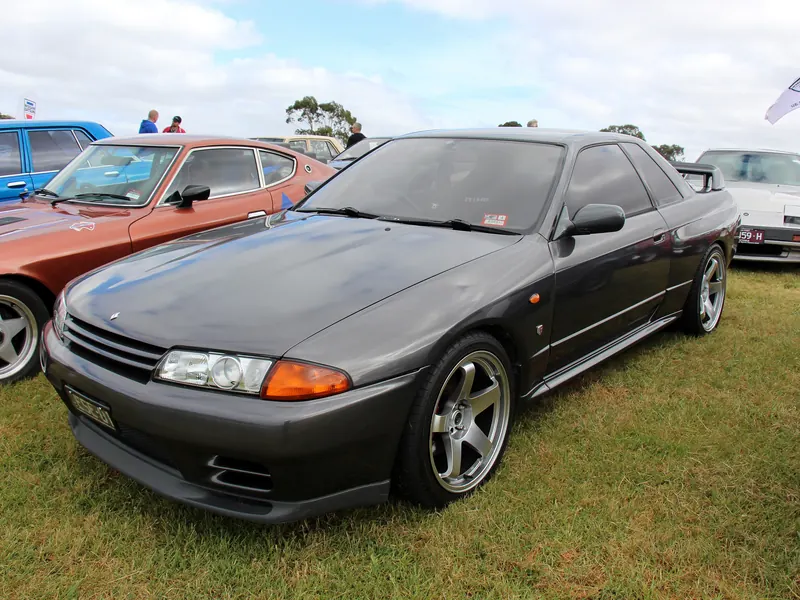
Then the Skyline GT-R came back. After a 16-year break the GT-R name was revived in 1989, and the R32 had a 2.6-litre twin-turbo straight-six engine and all-wheel drive.

The R32 was designed to dominate Group A touring-car racing. In Japan it won all 29 races it entered in the national touring car championship, and took the title every year from 1990 to 1993.

A dark grey Nissan Skyline R32 GT-R coupe parked on grass
A 1991 Nissan Skyline R32 GT-RSicnag · CC BY 2.0

1911 – today

Who owned Nissan?

From a Tokyo workshop to a three-company alliance, here is who has been behind Nissan.

  1. 1911
    Kwaishinsha Motor Car Works

    Masujiro Hashimoto's small Tokyo workshop, which builds the DAT in 1914.

  2. 1928
    Nihon Sangyo

    Yoshisuke Aikawa becomes its president. The name Nissan comes from this company.

  3. 1931
    Tobata Casting

    Aikawa's casting company takes DAT Jidosha Seizo on as a subsidiary.

  4. 1933
    Jidosha Seizo

    Nihon Sangyo and Tobata Casting set up the car company in Yokohama on 26 December.

  5. 1934
    Nissan Motor Co.

    Renamed in June, when Nihon Sangyo becomes its 100% investor.

  6. 1966
    Prince Motors

    Prince merges with Nissan, bringing the Skyline and the Gloria.

  7. 1999
    Renault

    Signs an alliance on 27 March and takes a 36.8% stake. Carlos Ghosn joins as chief operating officer.

  8. 2001
    Nissan buys into Renault

    Nissan takes a 15% share of Renault, and Renault's stake in Nissan rises to 43.4%.

  9. 2016
    Mitsubishi Motors

    Nissan buys a 34% stake in Mitsubishi Motors, which joins the alliance.

  10. 2023
    Equal stakes

    Renault cuts its Nissan stake from about 43% to 15%, putting the two on equal footing.

1997 – today

Electric ideas

Nissan began researching lithium-ion batteries for cars in 1992. The Prairie Joy EV of 1997 was, in Nissan's words, the world's first commercial electric vehicle to use them.

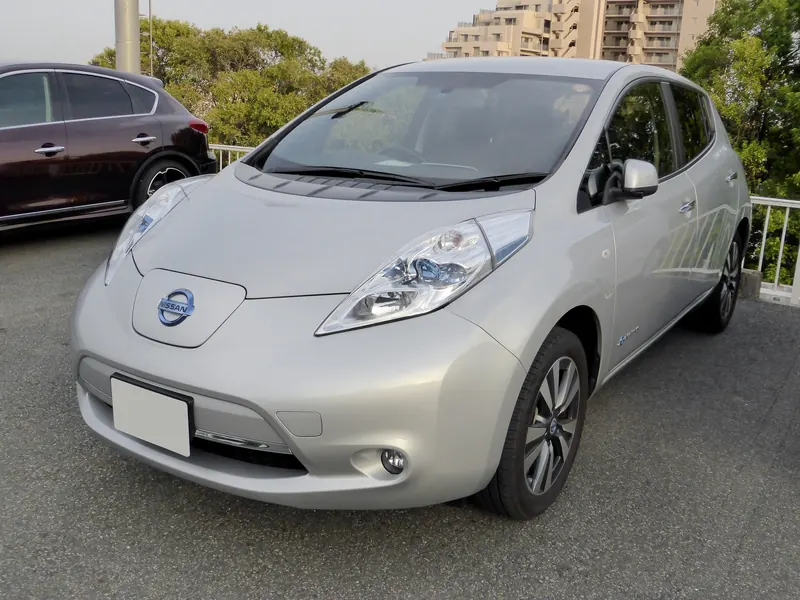
In 2007 the GT-R spun off from the Skyline and became a super sports car in its own right. In 2010 came the Leaf, which Nissan calls the world's first mass-produced EV.

In 2016 Nissan introduced e-POWER, a system in which a petrol engine charges the battery for the electric motor that drives the car. The Note e-POWER became Japan's best-selling car in 2018.

A silver first-generation Nissan Leaf hatchback photographed from the front
A Nissan Leaf (ZE0), the first-generation modelTokumeigakarinoaoshima · CC0

1934 – 1992

Nissan in Australia

The first Nissan imported to Australia was a Datsun, the Type 12 Phaeton, in 1934. In 1958 two Datsun 210s entered the 16,000-kilometre Mobilgas Trial around Australia and came first and fourth in Class A, for engines under 1,000 cc. Nissan says the result drew attention when the 210 was shown in New York the following April, and laid the foundation for its exports to America.

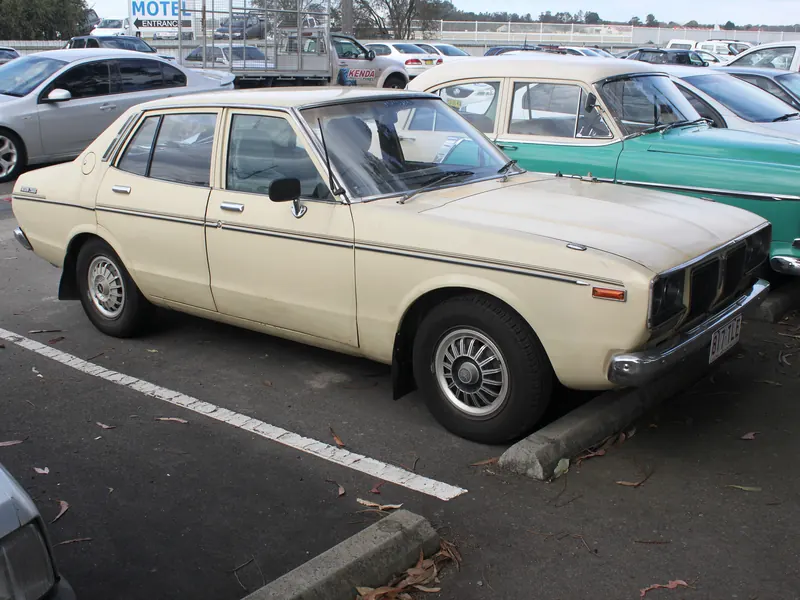
Nissan Motor Co. (Australia) was established in September 1966. In 1976 Nissan took over the former Volkswagen plant at Clayton, Victoria, and production there began in 1977 with the Datsun 200B. The Pulsar, Skyline and Pintara followed, and Nissan's Australian vehicle production ended in 1992.

Australians also gave the R32 Skyline GT-R its famous nickname. Australia's Wheels magazine used the name on its July 1989 cover, warning Ford fans about Nissan's new 'Godzilla on wheels'. In 1991 the GT-R became the first Japanese car to win the Bathurst 1000, driven by Jim Richards and Mark Skaife, and it won again in 1992.

A cream 1977 Datsun 200B sedan in a car park
A 1977 Datsun 200B, the first car Nissan built at ClaytonJeremy from Sydney, Australia · CC BY 2.0

Myth or fact?

Three things people get wrong

Open a card for the fact.

MythDatsun and Nissan were different companies.Tap for the fact
Fact

Datsun was Nissan's own brand. The company took the name Nissan Motor in 1934, and its small cars kept the Datsun badge. In July 1981 Nissan decided that its overseas markets would use one brand name, Nissan, and Datsun was phased out in the years that followed.

MythThe Godzilla nickname came from Japan.Tap for the fact
Fact

It came from Australia. Wheels magazine used the name on its July 1989 cover, calling the new Skyline a 'Godzilla on wheels'. Japan already called the new Skyline an obakemono, a monster, but Godzilla was the nickname that stuck around the world.

MythThe Skyline was always a Nissan.Tap for the fact
Fact

It began as a Prince. Nissan's own history says the Prince Skyline was launched in 1957 by Fuji Precision Machinery, the predecessor of Prince Motors, and Prince merged with Nissan in 1966.

By the numbers

Nissan in four figures

16,000 km
Mobilgas Trial around Australia, 1958, where Datsun 210s finished 1st and 4th in Class A
1,000,000
cumulative Nissan exports by November 1969
29
touring car races won from 29 entered by the R32 GT-R in Japan, 1990 to 1993
1992
the year Nissan's Australian vehicle production ended