
MG

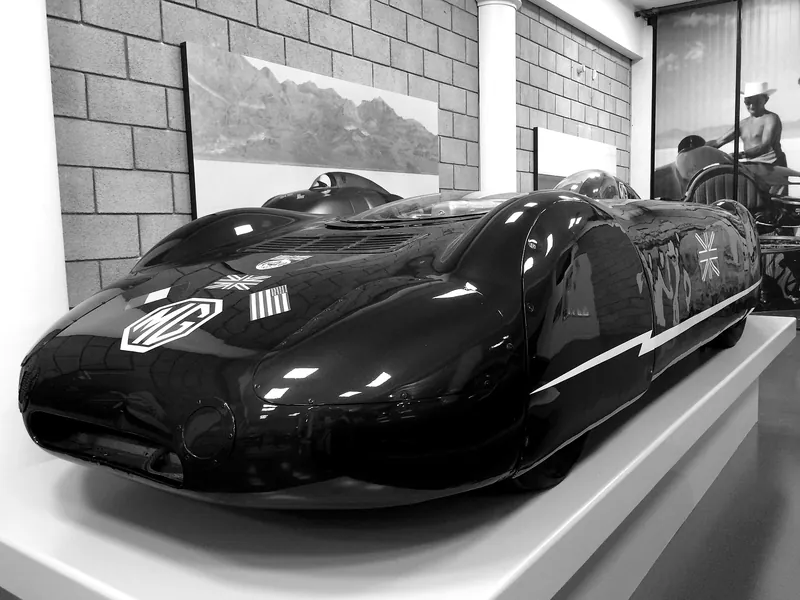
On the Bonneville salt flats in 1957, Stirling Moss drove the streamlined MG EX181 to more than 245 miles per hour.

0 cars

Studio
360°
Filter & Sort

Stock list updated 2 hours ago

Make / Model
Price
–
Year / KMs
–
More Filters

Body

Drive

Fuel

Seats

Cylinders

Paint

Lifestyle

Origin

Discounts

SortJust Arrived (Latest)
Reset all filters

No cars match those filters.

Clear filters

The MG story

The MG story: the one-minute overview, narrated by Michi1:04

1921 – 1925

A garage in Oxford

MG takes its name from Morris Garages, the Oxford sales and repair business owned by William Morris, the car maker later known as Lord Nuffield. In 1921 it took on a sales manager called Cecil Kimber, and within a couple of years he was running it.

Kimber's idea would outlive him: take ordinary Morris cars, give them lower, lighter, sportier bodies, and sell them as something special. By 1924 the 14/28 Super Sports, built on the Morris Oxford, had made the M.G. name stick.

The octagon badge was already in Oxford newspaper advertisements in 1923. It is credited to Ted Lee, the garage's cost accountant, and a century later it is still the badge on the bonnet.
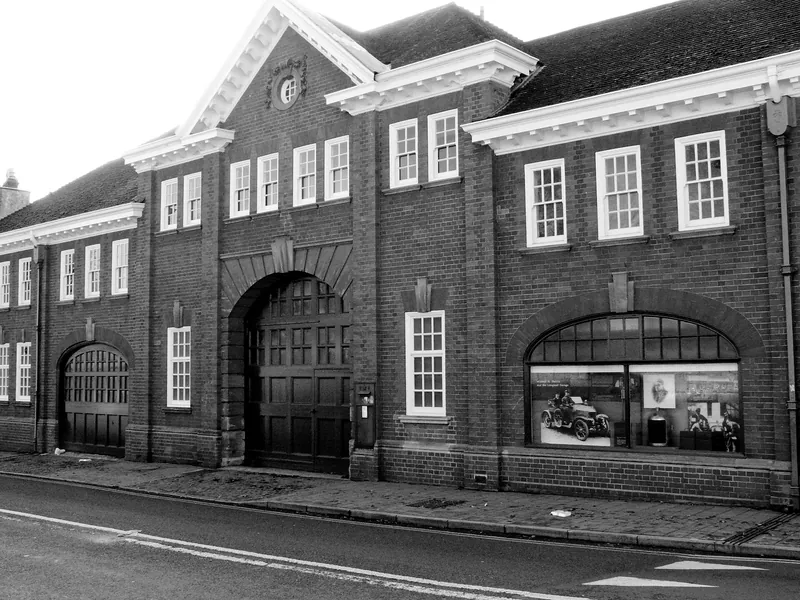
The red-brick Morris garage building on Longwall Street, Oxford
William Morris's garage on Longwall Street, OxfordAndrew Gray · CC BY-SA 3.0

1925 – 1939

Abingdon, and Safety Fast!

In 1925 Kimber built a one-off special for the Land's End Trial and won a gold medal in it. He called it his first MG; history knows it as Old Number One, the first MG built specifically for competition. It was later found in a Manchester scrapyard and bought back for £15.

Demand soon outgrew Oxford. In 1929 MG moved into part of the old Pavlova Leather Company works in Abingdon, a few miles south, and stayed for 51 years.

The company found its motto too: Safety Fast!, a cheeky twist on the road-safety catchphrase Safety First.

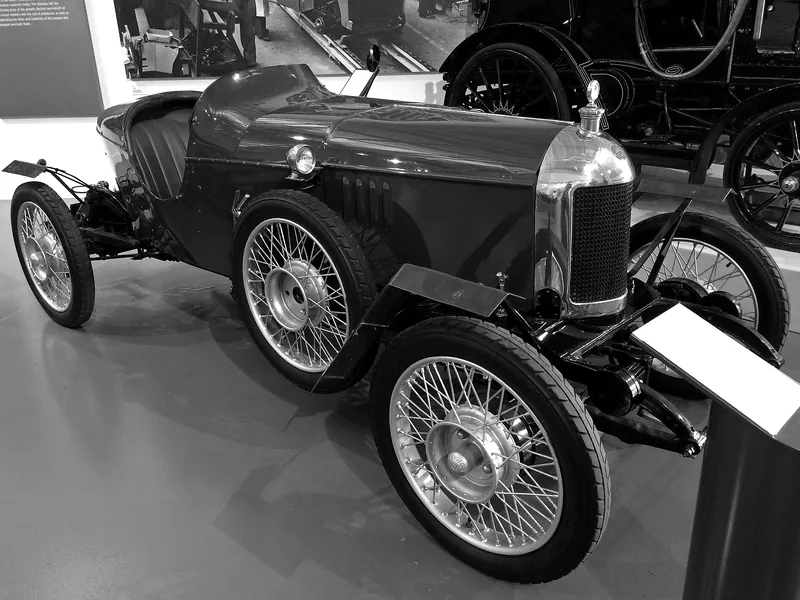
Old Number One, a 1925 MG trials special with wire wheels, on display
Old Number One (1925) at the British Motor MuseumKaren Roe · CC BY 2.0

1931 – 1957

Small engines, huge numbers

MG used record cars to prove what its engineering could do. The bars show each car's top recorded speed.

The streamlined EX135 record car on a museum plinth
EX135 at the British Motor MuseumKaren Roe · CC BY 2.0
  1. EX1201931 · 750 cc
    166 km/h (103 mph)

    George Eyston at Montlhéry, France: the first 750 cc car past 100 mph.

  2. EX1351939 · 1.1 litres
    327 km/h (203 mph)

    Goldie Gardner on a German autobahn near Dessau: more than 200 mph from 1.1 litres.

  3. EX1811957 · 1.5 litres, supercharged
    395 km/h (245 mph)

    Stirling Moss on the Bonneville Salt Flats, USA: 245.64 mph.

On the track, MG K3 Magnettes won the team prize at Italy's 1933 Mille Miglia, the first non-Italian team to do it, and Tazio Nuvolari won that year's Tourist Trophy in Northern Ireland in a K3.

1945 – 1949

The car that crossed the Atlantic

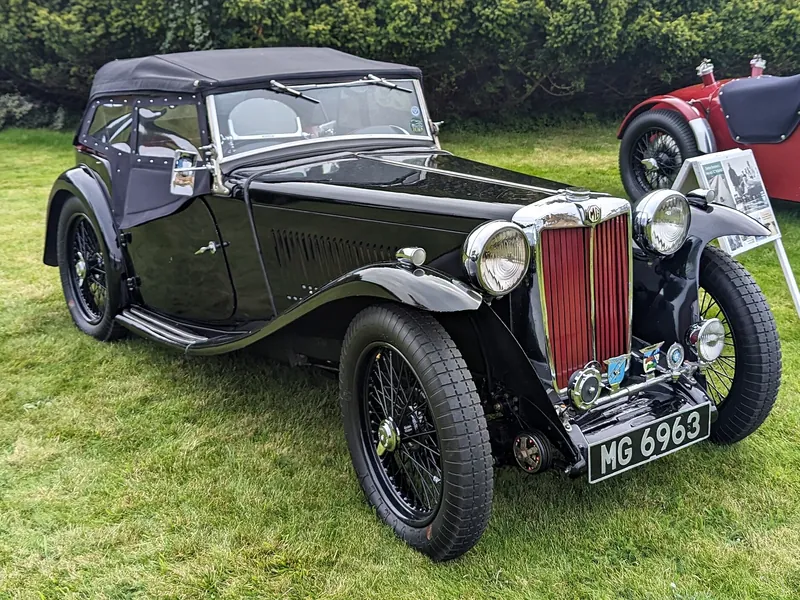
After the war MG went back to what it knew best: the TC Midget, a small, upright, wire-wheeled two-seater. About 10,000 were built between 1945 and 1949, and two in every three were exported.

Some 2,000 went to the United States. American servicemen who had met MGs in Britain during the war are widely credited with taking the bug home, and the TC is often named as the spark for America's love of British sports cars.

A black 1946 MG TC Midget with its hood up, parked on grass
A 1946 MG TC MidgetCalreyn88 · CC BY 4.0

1955 – 1980

The MGA and the MGB

In 1955 the MGA swapped the upright pre-war look for a smooth, modern body. By 1962, 101,081 had been built, making it the first MG model past 100,000.

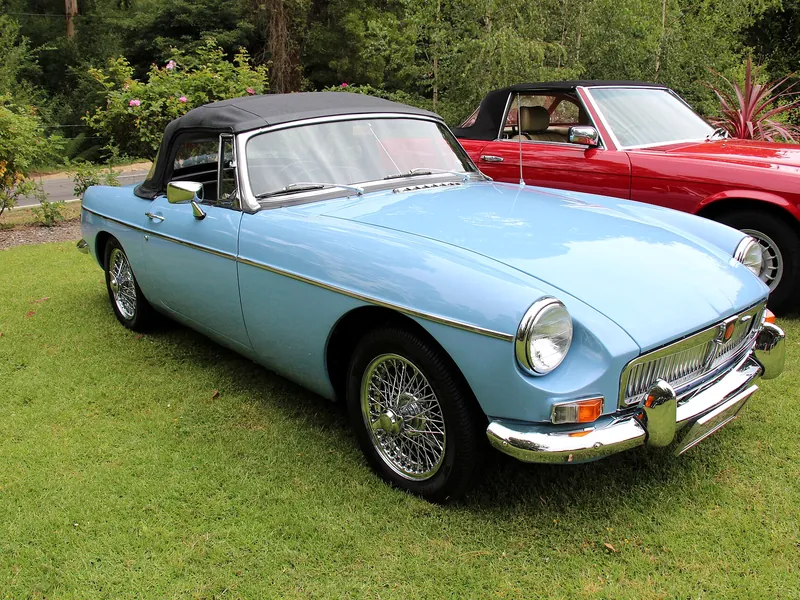
Then came the MGB: launched in 1962, joined by the MGB GT in 1965, and built for eighteen years. 512,243 were made, roadsters and GTs together.

When the last MGBs were built in October 1980, the Abingdon factory closed with them, after 51 years.

A light blue 1966 MGB roadster with wire wheels, parked on a lawn
A 1966 MGB roadsterSicnag · CC BY 2.0

1924 – today

Who owned MG?

MG has changed hands more often than most cars on our lot.

  1. 1924
    Morris Garages

    William Morris's Oxford business. Cecil Kimber creates the marque.

  2. 1935
    Morris Motors

    Lord Nuffield, who owned MG personally, sells it to Morris Motors. The works racing programme stops.

  3. 1952
    British Motor Corporation

    Austin and the Nuffield Organisation merge. The MGA and MGB are BMC cars.

  4. 1966
    British Motor Holdings

    BMC merges with Jaguar to form British Motor Holdings.

  5. 1968
    British Leyland

    Owned by the British government from 1975. The MG badge goes on sporty Metros, Maestros and Montegos in the 1980s.

  6. 1986
    Rover Group

    British Leyland is renamed Rover Group.

  7. 1988
    British Aerospace

    Buys Rover Group, MG included.

  8. 1994
    BMW

    For six years MG is German-owned. The mid-engined MGF roadster arrives in 1995.

  9. 2000
    MG Rover Group

    The Phoenix Consortium buys MG and Rover from BMW. The ZR, ZS and ZT follow in 2001.

  10. 2005
    Nanjing Automobile

    After MG Rover goes into administration in April, Nanjing buys MG in July.

  11. 2007
    SAIC Motor

    Nanjing merges into Shanghai's SAIC Motor, which has owned MG ever since.

1995 – today

A new chapter

MG never stopped reinventing itself. The mid-engined MGF arrived in 1995, and in 2001 the ZR, ZS and ZT took the badge into sporty hatchbacks, sedans and wagons.

Under its new owners, MG production restarted in China in 2007 and at Longbridge, Birmingham, in 2008; assembly there ended in 2016. In 2018 SAIC opened an advanced design studio on London's Marylebone Road.

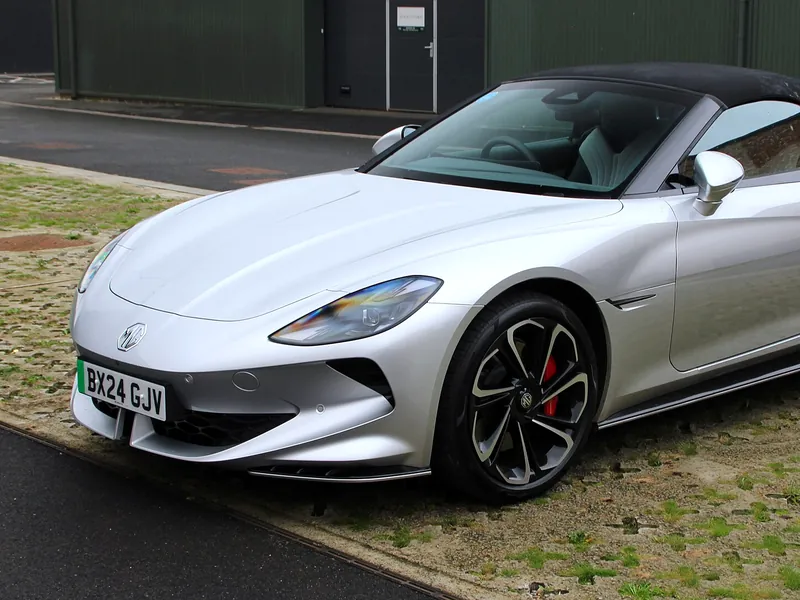
That studio led the design of the Cyberster, an electric two-seat roadster revealed in 2023 and launched for MG's centenary. In China the brand is called 名爵, Míngjué: 名 for name or renown, 爵 for a noble title.

A silver MG Cyberster electric roadster with its roof up
The MG Cyberster, 2024MrWalkr · CC BY-SA 4.0

1939 – today

MG in Australia

Australians were racing MGs almost as soon as they arrived. On 2 January 1939 Allan Tomlinson won the Australian Grand Prix at Lobethal, South Australia, in a supercharged MG TA.

From 1957 MGAs were assembled in Sydney at Pressed Metal Corporation's Enfield plant, and from 1963 to 1972 MGB roadsters were too: first at Enfield, then at BMC Australia's Zetland plant. Somewhere between 9,000 and 10,000 Australian-assembled MGBs were made.

The modern MG returned in stages: the MGF in 1997, an independent relaunch in 2013, and SAIC's own MG Motor Australia from October 2016, with the MG3, MG6 and GS.

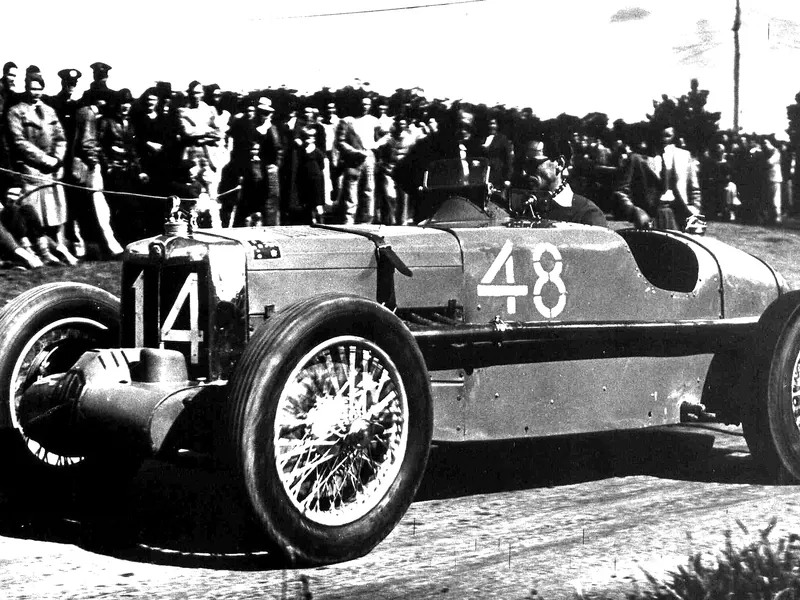
An MG K3 Magnette racing car, number 48, passing a crowd at a hillclimb in 1949
John Barraclough's MG K3 Magnette at Rob Roy hillclimb, Victoria, 1949Unknown photographer, via Collections Victoria · Public domain

Myth or fact?

Three things people get wrong

Open a card for the fact.

MythOld Number One was the first MG.Tap for the fact
Fact

MGs were already being sold in 1923 and 1924. Old Number One, built in 1925, was the first MG made specifically for competition. Motor Sport magazine called it mis-named back in 1975.

MythMG was founded in 1924.Tap for the fact
Fact

There is no single founding date. The MG Car Club says the first MGs were sold in 1923, and MG celebrated its centenary in 2024. A 1928 trademark filing that claimed first use in May 1924 helped the later date stick.

MythMG stands for Modern Gentleman.Tap for the fact
Fact

That was a marketing image used in China in the mid-2000s. MG comes from Morris Garages, William Morris's business in Oxford.

By the numbers

MG in four figures

51 years
building MGs at Abingdon, 1929 to 1980
512,243
MGBs built, roadsters and GTs
101,081
MGAs: the first MG model past 100,000
395 km/h
Stirling Moss in EX181, 1957, from 1.5 litres