
Lexus

The brand began as a secret Toyota project code-named F1, short for Flagship One, which produced the LS 400 in 1989.

1 car

Studio
360°
Filter & Sort

Stock list updated 10 hours ago

Make / Model
Price
–
Year / KMs
–
More Filters

Body

Drive

Fuel

Seats

Cylinders

Paint

Lifestyle

Origin

Discounts

SortJust Arrived (Latest)
Reset all filters

Aichi · Detroit · Tokyo · Melbourne

The Lexus story

From a secret project in 1983 to an electric future: four decades, told in five minutes.

1983 – 1988

A challenge from Eiji Toyoda

In 1983 Eiji Toyoda issued a challenge: build the world's best car. The project began as a secret and was code-named F1, short for Flagship One. Toyota's largest sedan then was the hand-built Century, a limousine for Japan, while F1 was aimed at buyers overseas.

Toyota set no deadline. In May 1985 researchers went to the United States to study luxury buyers, and several F1 designers rented a home in Laguna Beach, California, to watch how they lived. The research concluded that the new car needed a brand and a dealer network of its own.

By 1989 F1 had involved 60 designers, 1,400 engineers, 2,300 technicians and about 450 prototypes. Saatchi & Saatchi formed a unit called Team One in 1986 to handle the new brand, and a consultancy drew up 219 possible names. Lexus is said to have grown out of Alexis, though Team One says the name has no specific meaning.
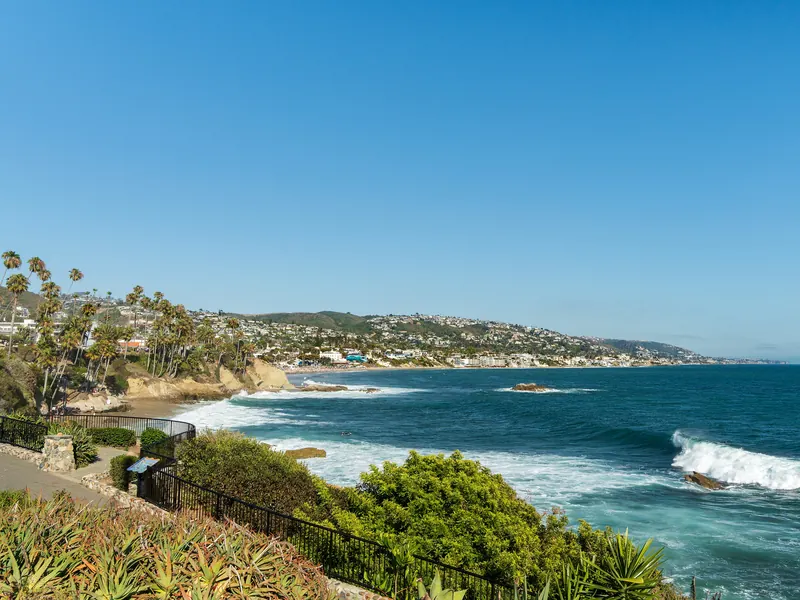
A rocky coastline with palm trees, headlands and blue sea at Laguna Beach, California
The coast at Laguna Beach, California, where F1 designers rented a home in 1985NorbertNagel · CC BY-SA 4.0

1989

The LS 400 and the champagne glasses

The LS 400 broke cover at the North American International Auto Show in Detroit in January 1989, and US sales began that September alongside a smaller sedan, the ES 250. It was praised for its quietness, build quality and value. In Japan it was sold as the Toyota Celsior, because Lexus did not exist as a brand there until 2005.

Lexus introduced itself to American television with Balance, a 1989 advertisement made by Team One. An LS 400 sat on rollers with a pyramid of champagne glasses on its bonnet, running up to the equivalent of 145 mph (about 230 km/h) without spilling a drop.

In December 1989 Lexus recalled all 8,000 LS 400s after two customer complaints about defective wiring and an overheated brake light. Technicians collected, repaired and returned the cars free of charge, even flying staff out to owners in remote places. The response was widely covered and helped build the marque's early reputation for customer service.

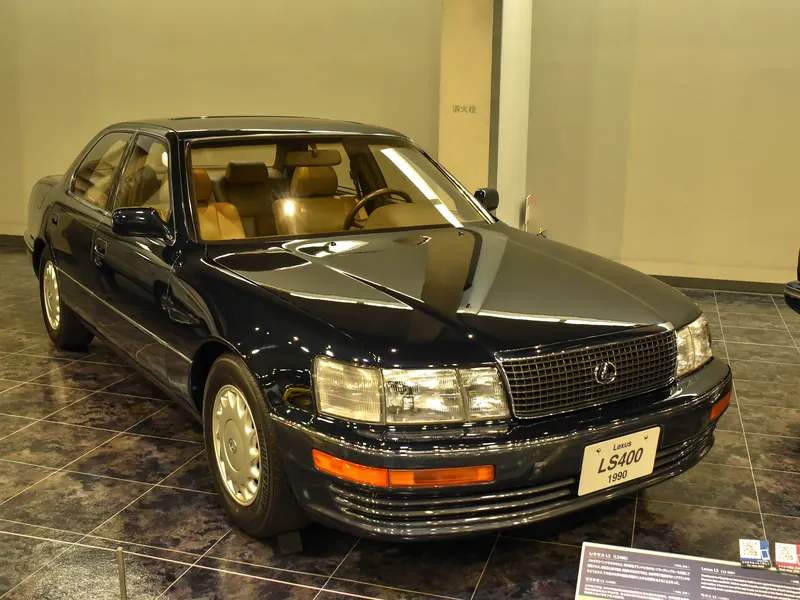
A dark first-generation Lexus LS 400 sedan on display on a museum floor
A 1990 Lexus LS400 at the Toyota Automobile Museum, AichiCoolalabright · CC BY 4.0

1991 – 2003

From sedans to the RX

In 1991 Lexus launched its first coupe, the SC 400, which used the LS 400's V8, and ended the year as the top-selling luxury import in the United States. A first sport utility vehicle, the LX 450, followed in 1996.

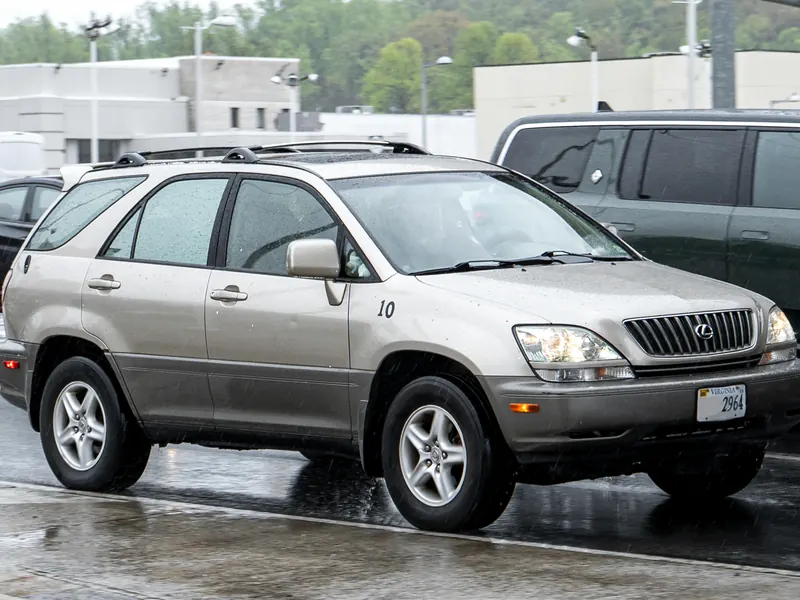
Then came the RX 300 in 1998, the first luxury-branded crossover. Lexus exports began in March 1998, three months after the car went on sale in Japan.

The RX became the best-selling car in the range, at one point accounting for half of all Lexus sales, with 370,000 RX 300s sold worldwide before the second generation arrived in 2003. The entry-level IS sport sedan followed in 1999, the year Lexus recorded its one-millionth sale in the United States.

A champagne-coloured first-generation Lexus RX 300 driving along a wet road
A first-generation Lexus RX 300OWS Photography · CC BY 4.0

2004 – 2009

Hybrids, and a home at last

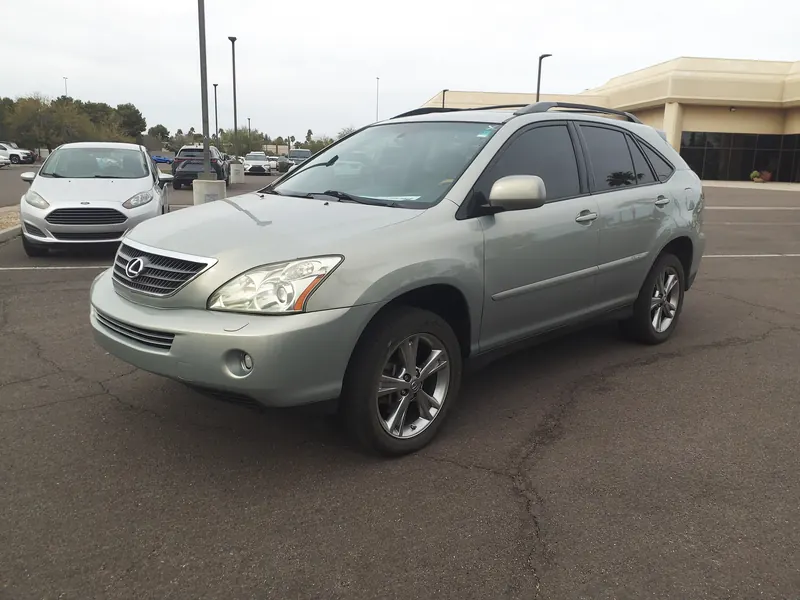
A prototype of the RX 400h, billed as the world's first luxury hybrid, was shown in 2004, and the car was introduced in 2005. It combined a petrol engine and electric motors using Toyota's Hybrid Synergy Drive. The GS 450h followed in 2006, then the LS 600h, billed as the world's first V8 hybrid.

In 2005 Lexus opened its own dealerships in Japan, the first Japanese premium marque to launch in its home country. Models that had worn Toyota names there, such as the Celsior and the Harrier, became Lexus models. After a reorganisation that ran from 2001 to 2005, Lexus also began operating its own design, engineering and manufacturing centres.

In 2009 the HS 250h became Lexus's first dedicated hybrid, and the RX 450h replaced the RX 400h. Later that year, citing higher sales of hybrids than petrol cars, Lexus announced plans to become a hybrid-only marque in Europe.

A silver-green Lexus RX 400h SUV parked in a car park
A 2007 Lexus RX 400h, the first luxury hybrid SUVHJUdall · CC0

2007 – 2012

F, the LFA and a new face

In January 2007 Lexus announced a performance division, the F marque. Its first car, the IS F, made its debut at the Detroit show.

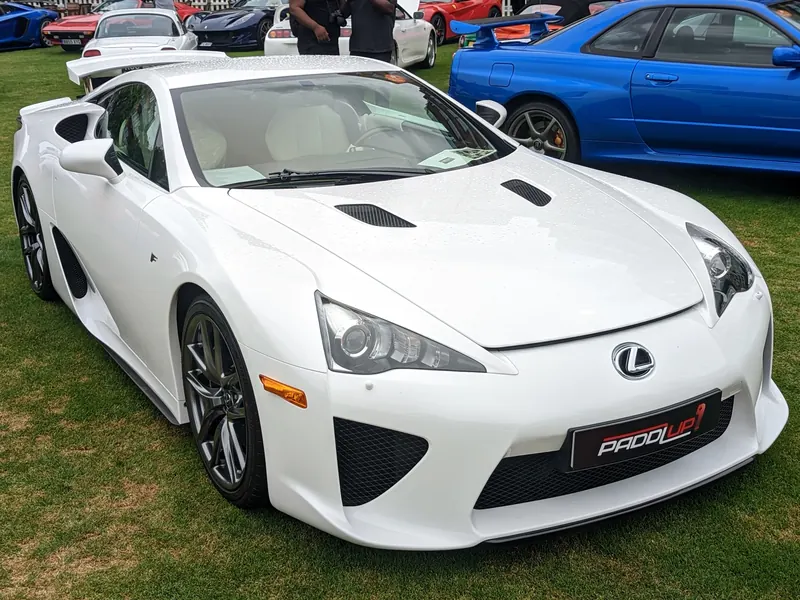
The F marque's halo was the LFA. It first appeared as the LF-A concept in 2005, and the production car was unveiled in 2009 with a 4.8-litre V10 co-developed with Yamaha. A five-year development plan turned to seven when Toyota decided to build the car entirely from carbon fibre, and only 500 were made.

In 2012 the redesigned GS introduced the spindle grille, intended for every Lexus to follow. Around then Akio Toyoda admitted that Toyota had once regarded Lexus not as a brand, but as a distribution channel.

A white Lexus LFA supercar parked on grass
A Lexus LFACalreyn88 · CC BY-SA 4.0

1983 – 2024

Who ran Lexus?

Lexus has only ever been Toyota's. What changed is how Toyota organised it, and who led it.

  1. 1983
    The F1 project

    Eiji Toyoda sets the challenge to build the world's best car. Toyota sets no deadline.

  2. 1986
    Team One

    Toyota's advertising agency, Saatchi & Saatchi, forms a specialised unit to handle the new brand.

  3. 1989
    Lexus division

    Toyota launches its luxury line in the United States with the LS 400 and ES 250, sold through a new dealer network of its own.

  4. 1990
    First exports

    Limited exports begin to the United Kingdom, Switzerland, Canada and Australia.

  5. 2005
    Lexus Japan

    Lexus launches in its home market, and begins operating its own design, engineering and manufacturing centres.

  6. 2007
    F marque

    A performance division is announced in January. The IS F is its first car.

  7. 2012
    Leaders of its own

    By early 2012 Lexus is led by two managing officers, Kiyotaka Ise (engineering) and Kazuo Ohara (sales and marketing), who report to Akio Toyoda. A Lexus manager had told Automotive News that the brand never had a global leader at a senior level.

  8. 2014
    Tokuo Fukuichi

    Toyota's global design chief takes on the Lexus presidency as well, from 1 April.

  9. 2020
    Koji Sato

    A former Lexus chief engineer becomes president of Lexus International in January. In April 2023 he becomes president of Toyota.

  10. 2023
    Takashi Watanabe

    The head of Lexus Electrified Development takes over as president of Lexus International in March.

  11. 2024
    Shimoyama

    Lexus completes its move to a new headquarters near Toyota City, with sales, marketing, planning, R&D and design under one roof for the first time.

2019 – today

Electrified

In October 2019 Lexus announced its first all-battery electric car, the UX 300e, for 2020, and it reached Australia in 2021. Its first plug-in hybrid, the NX 450h+, arrived in Australia in 2022.

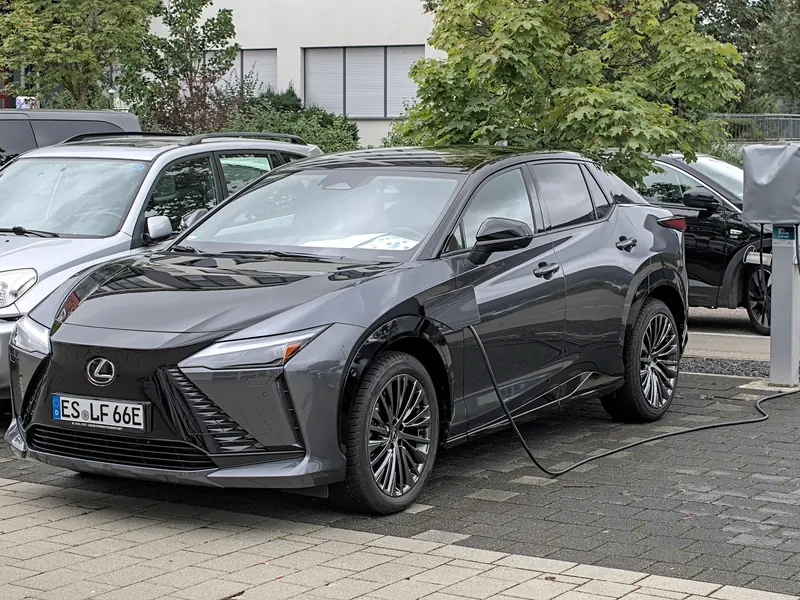
The RZ 450e reached Australia in 2023. It was the second Lexus EV and the first on a dedicated electric platform. The same year Lexus launched the LBX, its first vehicle in the B-segment, with a 1.5-litre three-cylinder hybrid engine.

In 2024, the brand's 35th anniversary, Lexus completed its move to a new headquarters at Shimoyama, near Toyota City. For the first time, sales, marketing, planning, research and development and design sit under one roof.

A dark grey Lexus RZ 450e electric SUV parked beside a charging post
A Lexus RZ 450e beside a charging post in FilderstadtAlexander-93 · CC BY-SA 4.0

1990 – today

Lexus in Australia

Lexus's Australian story began in May 1990, when the LS400 arrived. More than 250 customers took delivery at the start, and that year Wheels magazine named it Car of the Year.

A second model, the ES300, followed in 1992, with 580 delivered in its first year. Lexus delivered its 1000th Australian vehicle the same year. Sales built slowly: it took 18 years to reach 50,000 new cars, and the next 50,000 took seven and a half.

Lexus brought its first hybrids to Australia in 2006, the GS 450h and RX 400h. Of the 500 LFAs built, only eight were allocated here. In 2023 Lexus delivered more than 10,000 cars in a year for the first time, and in 2024 its 50,000th electrified vehicle.

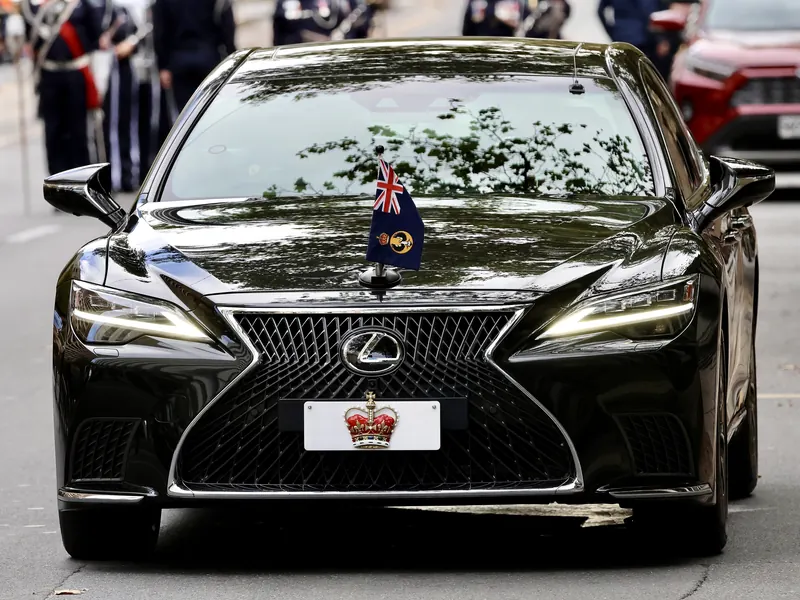
The front of a black Lexus LS 500h with a flag on its bonnet, driving in a ceremonial procession
The Governor of South Australia's Lexus LS 500h at the State Opening of Parliament, 5 May 2026Yu Chu Chin · CC BY-SA 4.0

Myth or fact?

Three things people get wrong

Open a card for the fact.

MythLexus stands for luxury exports to the US.Tap for the fact
Fact

That is a popular theory, but Lexus has never confirmed it. According to Team One interviews, the name has no specific meaning and simply evokes a luxurious and technological image.

MythThe champagne-glass advertisement was staged.Tap for the fact
Fact

Consumer advocate David Horowitz suggested exactly that. Lexus produced a third-party verification videotape and repeated the feat live for his studio audience. In 2011 it recreated the stunt with a new LS 460 and a 1990 LS 400.

MythLexus has always been sold in Japan.Tap for the fact
Fact

Lexus did not exist as a brand in its home market until 2005. From 1989 to 2005 the cars sold overseas as Lexus were sold in Japan as Toyotas, so the LS 400 was the Toyota Celsior.

By the numbers

Lexus in four figures

450 prototypes
built for the F1 project that became the LS 400
10 million
Lexus vehicles sold worldwide by February 2019
500
LFAs built in total, only eight of them allocated to Australia
18 years
for Lexus to sell its first 50,000 cars in Australia