
LDV

1 car

Studio
360°
Filter & Sort

Stock list updated 9 hours ago

Make / Model
Price
–
Year / KMs
–
More Filters

Body

Drive

Fuel

Seats

Cylinders

Paint

Lifestyle

Origin

Discounts

SortJust Arrived (Latest)
Reset all filters

Birmingham · Shanghai · Sydney

The LDV story

From the Leyland Sherpa to the T60 ute: a van maker's winding road, told in five minutes.

1960 – 1987

A Sherpa with a Leyland badge

LDV's story starts before there was an LDV. In 1974 British Leyland launched a new light van, first called the Leyland Van and later renamed the Sherpa. It was derived from the Morris and BMC J4 vans of the 1960s.

The Sherpa moved the engine ahead of the cab, under a bonnet. It was designed to be built on car production lines, which gave it a narrow track, and later publicity made a virtue of that in tight city streets. Royal Mail, in particular, bought huge fleets.

In 1981 British Leyland's light vans became a single brand, Freight Rover, essentially a face-lifted Sherpa. In 1987 the Leyland Trucks division, vans included, merged with Dutch truck maker DAF to form DAF NV, which traded in Britain as Leyland DAF.
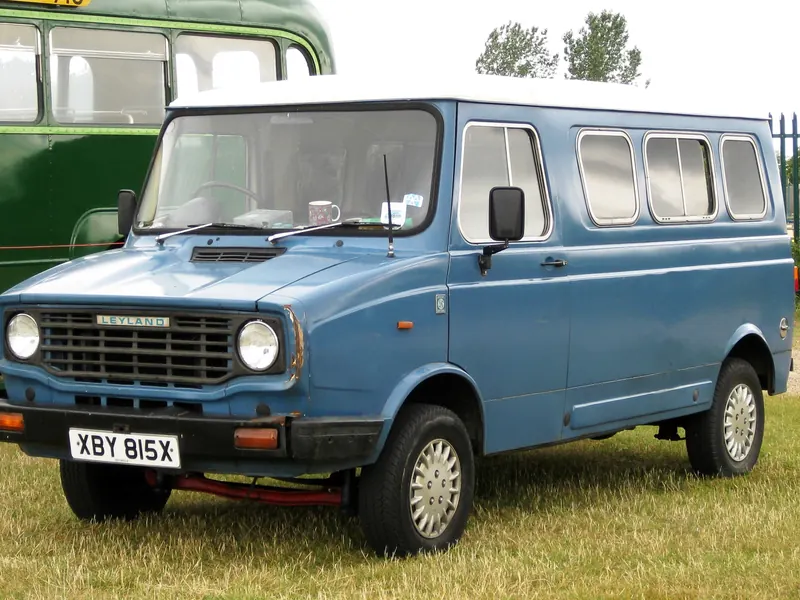
A blue Leyland-badged Sherpa minibus parked on grass beside a vintage green bus
A Leyland-badged Sherpa from the early 1980sCharles01 · CC BY-SA 3.0

1993 – 1998

Managers buy the van business

In February 1993 DAF NV, Leyland DAF's Dutch parent, became insolvent and Leyland DAF went into receivership. Four new companies emerged from it as management buyouts, and one of them was the van maker at Washwood Heath in Birmingham.

Its chief executive, Allan Amey, led a buyout backed by the investor 3i. The van division had employed 1,800 people before the collapse, the receivers cut that to 960, and there were doubts the factory could be saved.

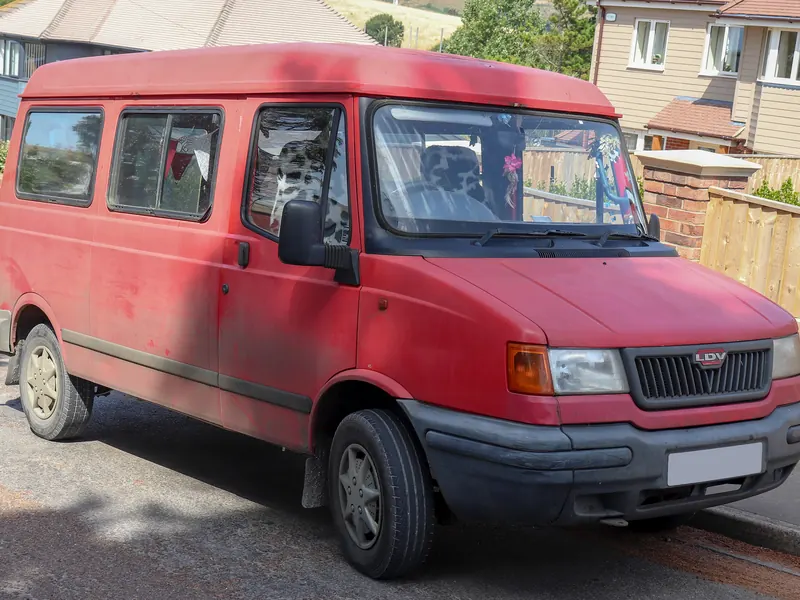
The new company, Leyland DAF Vans, reported profits of £8.6 million on turnover of £80 million for its first eight months, and announced a change of name to LDV. The old 200 and 400 Series vans were facelifted on the existing chassis and renamed Pilot and Convoy.

A red LDV Pilot minibus with the LDV badge on its grille, parked at a kerb
An LDV Pilot from 1998Vauxford · CC BY-SA 4.0

1998 – 2005

The Maxus

In March 1998 LDV announced a link-up with South Korea's Daewoo to develop a new range of vans, a plan expected to quadruple production at Birmingham to up to 80,000 vans by 2005. Then Daewoo collapsed in 2000.

LDV carried on and bought Daewoo's tools and intellectual property rights. In 2003 it announced the move of about 6,250 tons of tooling and assets from redundant Daewoo facilities in Poland and Korea to its plant on Drews Lane, Washwood Heath.

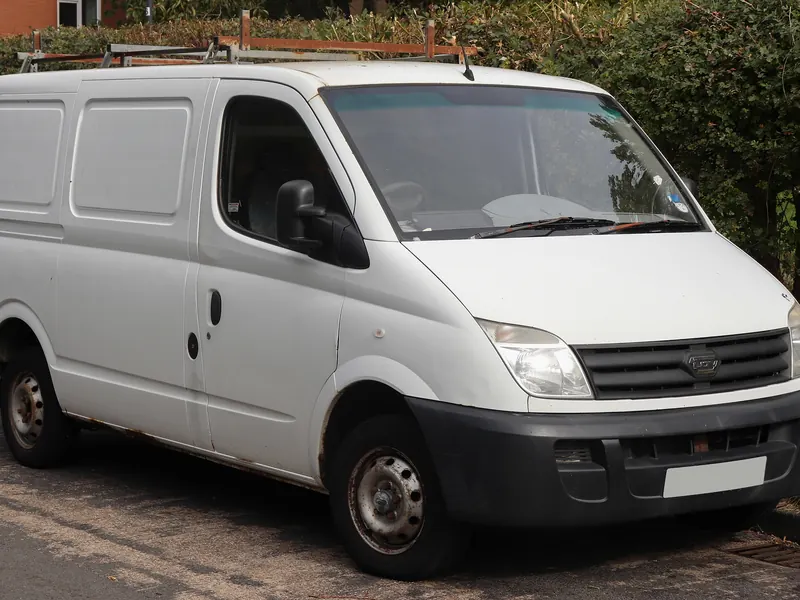
The result, the LDV Maxus, was launched at the end of 2004, with diesel engines from Italy's VM Motori. It won the Professional Van and Light Truck Magazine award for Van of the Year 2005.

A white LDV Maxus panel van with a roof rack, parked beside a hedge
An LDV Maxus from 2005Vauxford · CC BY-SA 4.0

2005 – 2011

Administration, Russia and China

In December 2005 LDV was bought out of administration by the US investor Sun Capital Partners, and 3i sold its stake. On 31 July 2006 the Russian group GAZ bought LDV, saying it planned to expand production at Birmingham with new product lines and new markets.

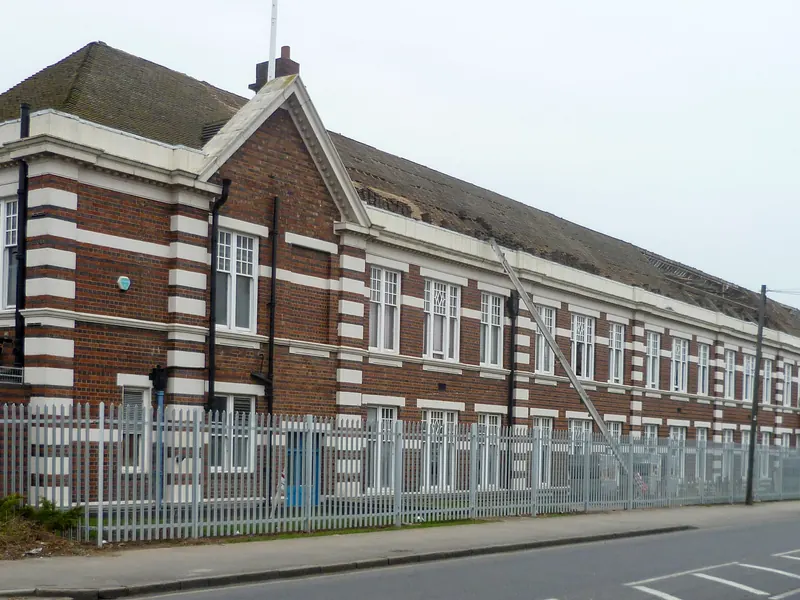
Then the recession bit. Production was suspended in December 2008, a rescue by Malaysia's WestStar Corporation failed to find financing, and LDV went into administration in 2009. In October the administrators, PricewaterhouseCoopers, agreed to sell its assets to the Chinese engineering firm Eco Concept.

SAIC Motor acquired LDV's intellectual property in 2010, and SAIC Maxus Automotive was established on 21 March 2011. Its name comes from the LDV Maxus van.

A long red-brick factory building with white banding, partly stripped of its roof, beside a Birmingham street
LDV's former main plant on Drews Lane, Birmingham, being cleared in 2011DeFacto · CC BY-SA 4.0

1974 – today

Who owned LDV?

From British Leyland to Shanghai: a lot of letterheads for one family of vans.

  1. 1974
    British Leyland

    The Sherpa van is launched under the Leyland name.

  2. 1981
    Freight Rover

    British Leyland's light vans become one brand, part of its Land Rover Group.

  3. 1987
    Leyland DAF

    Leyland Trucks and its vans merge with DAF Trucks to form DAF NV, trading in Britain as Leyland DAF.

  4. 1993
    LDV Group

    A 3i-backed management buyout led by Allan Amey takes over the van plant after DAF NV collapses.

  5. 2005
    Sun Capital Partners

    The US investor buys LDV out of administration in December. 3i sells its stake.

  6. 2006
    GAZ

    Russia's GAZ buys LDV on 31 July and plans to expand production at Birmingham.

  7. 2009
    Eco Concept

    After LDV goes into administration, PricewaterhouseCoopers agrees to sell its assets to this Chinese vehicle engineering firm.

  8. 2010
    SAIC Motor

    SAIC acquires LDV's intellectual property.

  9. 2011
    SAIC Maxus

    SAIC Maxus Automotive is established on 21 March, a wholly owned SAIC Motor subsidiary.

2012 – 2014

LDV in Australia: the vans

Australia first heard of the van in March 2012, when CarsGuide reported that the Maxus would arrive that year through White Motor Corporation, known as WMC. It was built by SAIC in China, largely the same as the original, and the design was the work of the British LDV stylists.

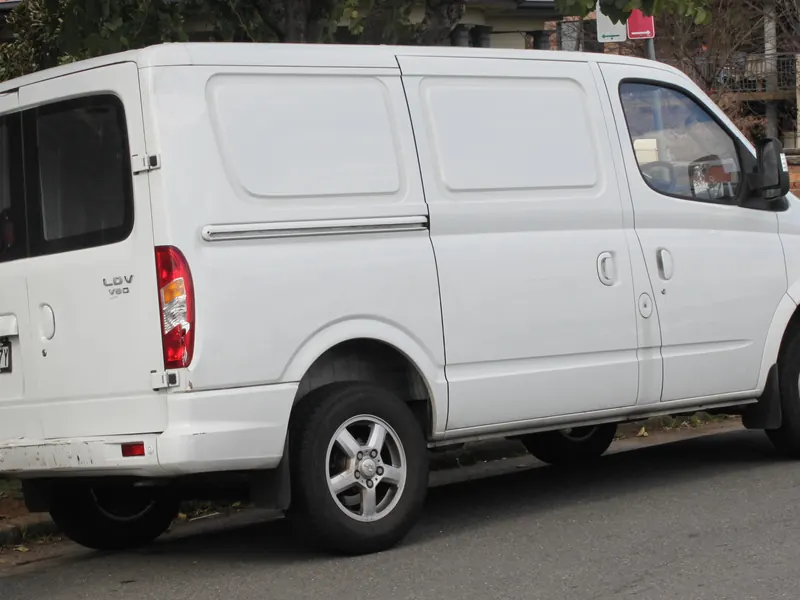
The V80 went on sale nationally under WMC in January 2013, powered by a 2.5-litre VM Motori turbo-diesel. It had been called Maxus before the name was changed after a conflict with an aftermarket component manufacturer.

In July 2014 Sydney-based Ateco Automotive took over distribution from WMC, with the relaunch locked in for October. LDV was officially relaunched in Australia that month, with the V80 back on sale.

A white LDV V80 panel van parked at the kerb, seen from the rear left
An LDV V80 van, 2014Jeremy from Sydney, Australia · CC BY 2.0

2017 – today

LDV in Australia: the T60 era

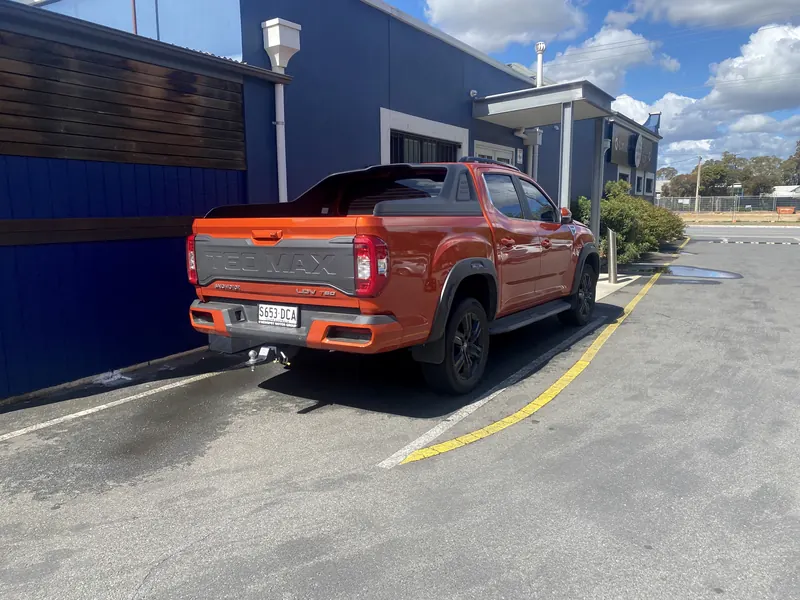
For its first years in Australia LDV was a van brand. That changed with the T60, the brand's first ute, which launched in late 2017 and which LDV's media consultant called the biggest single change in the brand since it launched in Australia.

By mid-2018 GoAuto was reporting that the T60 was leading LDV's growth. The range by then also counted the V80 and G10 vans, the G10 people-mover and the D90 SUV.

The Deliver 9 large van arrived in October 2020, and a larger ute, the Terron 9, reached showrooms in July 2025 alongside the T60. LDV is still imported and distributed in Australia by Ateco Automotive, while sister brand MG distributes its own vehicles.

An orange LDV T60 Max Pro ute parked beside a blue building, seen from the rear right
A 2024 LDV T60 Max Pro in Salisbury, South AustraliaRegionVisitor90 · CC0

Myth or fact?

Three things people get wrong

Open a card for the fact.

MythLDV stands for Leyland DAF Vehicles.Tap for the fact
Fact

The company was formed in 1993 as Leyland DAF Vans, and in 1994 it announced a change of name to plain LDV. Some later news stories wrote Vehicles, but Vans is what the company itself used.

MythToday's LDV is the same company as the British LDV that collapsed in 2009.Tap for the fact
Fact

They are different companies. LDV Group, the Birmingham van maker, ended in 2009. SAIC acquired its intellectual property, and SAIC Maxus Automotive, established in 2011, sells vans that are still branded LDV in Australia, New Zealand and South Africa.

MythThe V80 sold in Australia is a Birmingham-built van.Tap for the fact
Fact

Production at the Birmingham plant was suspended in December 2008. The V80 sold here was built by SAIC in China, and is largely the same as the original Maxus, whose design was the work of British LDV stylists.

By the numbers

LDV in four figures

1,800 people
in Leyland DAF's van division before the 1993 collapse; the receivers cut it to 960
6,250 tons
of Daewoo tooling and assets moved to Birmingham for the Maxus
2005
Van of the Year, awarded to the LDV Maxus
2014
Ateco Automotive takes over LDV distribution in Australia