Place a $1000 holding deposit on this car and we’ll take it off the market while you arrange the rest. Fully refundable subject to viewing and test drive.
Card payment processed securely by Stripe. We’ll call you to confirm as soon as it lands.
Land Rover
Maurice Wilks built the earliest prototype on a surplus Willys Jeep chassis, complete with a steering wheel mounted in the centre.
After the Second World War, Maurice Wilks, Rover's engineering director, saw the potential for an agricultural vehicle that could drive on the road as well as on the land. His family owned land on the Welsh island of Anglesey, and he wanted something versatile that could double as a light tractor and an off-roader.
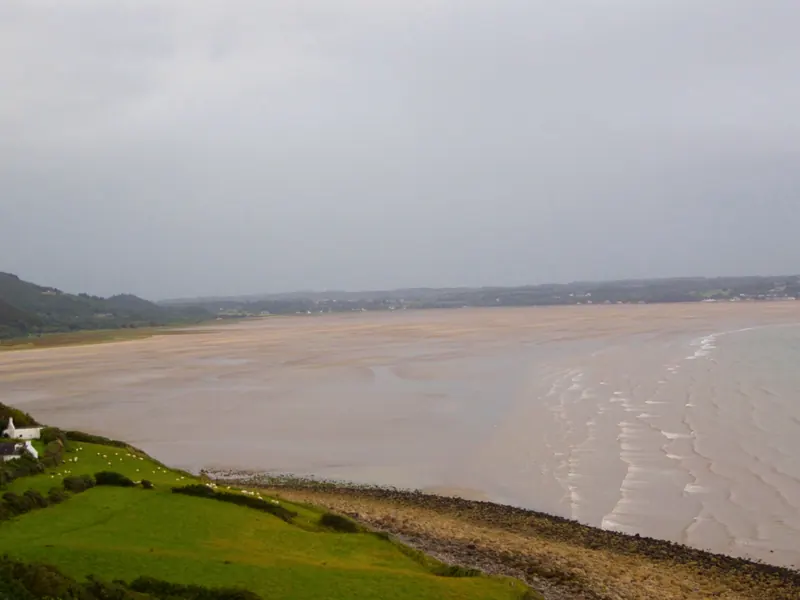
In early 1947 he met his brother Spencer, Rover's managing director, to pool ideas. According to the company, he sketched his vision for a multi-purpose four-wheel-drive vehicle in the sand of Red Wharf Bay.
Maurice used an American Willys Jeep on his farm, and the prototype, later nicknamed Centre Steer, was built on a Jeep chassis and axles.
Red Wharf Bay on Anglesey, where Land Rover says the first sketch was drawnTerry Kearney · CC0
1948
1948 – 1958
Amsterdam, 30 April 1948
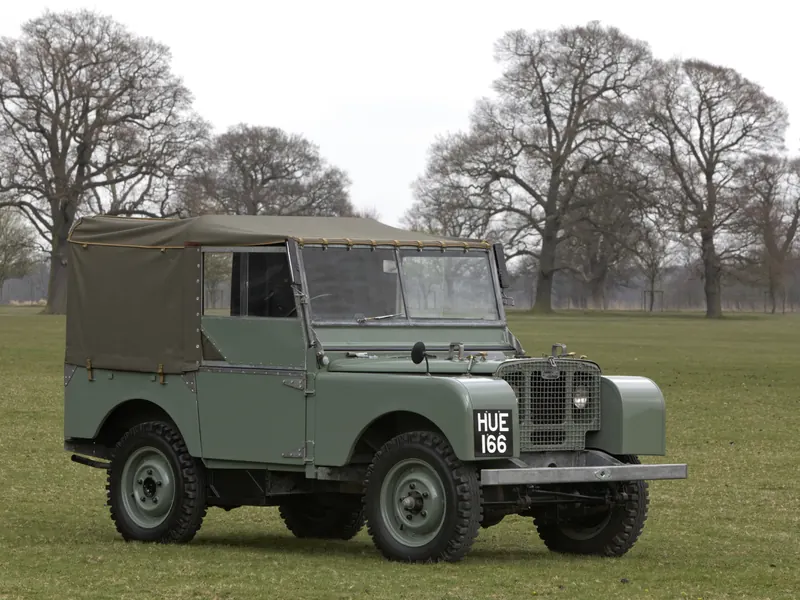
The Land Rover was launched at the Amsterdam Motor Show on 30 April 1948. Steel was rationed after the war, but aluminium was in good supply, having been used to build Spitfires, so the new vehicle got a plain, boxy alloy body on a simple steel chassis. Early ones came only in shades of light green, because military-surplus aircraft cockpit paint was what was available.
It was only meant to be a stop-gap, but it beat its first-year sales target of 5000 by 60 per cent. By 1950 it had outsold Rover's P3 saloons by two to one.
The British Army ordered its first Land Rovers in 1949. A long-wheelbase version followed in 1953, a diesel engine in 1957, and the Series II, with curved body sides, in 1958. The millionth Land Rover was built in 1976.
HUE 166, the first pre-production Land Rover (1948)Land Rover MENA · CC BY 2.0
1970
1970 – 1996
A car for all reasons
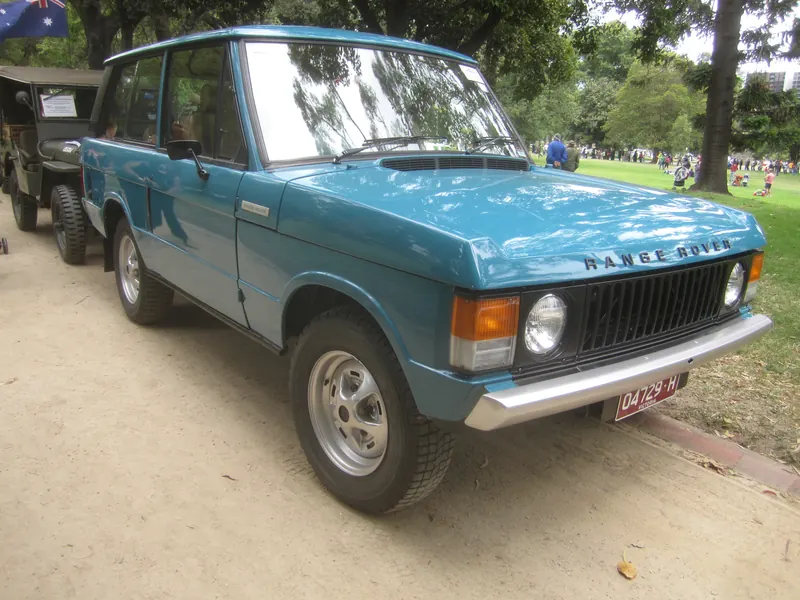
On 17 June 1970 the first Range Rover was released, a spin-off from the original Land Rover. It came as a two-door only, with permanent dual-range four-wheel drive, four-wheel disc brakes and a 3500 kg tow rating, and it was launched as 'A Car For All Reasons'.
Under the bonnet was a detuned version of the Rover V8, which had Buick roots, and the body was designed largely by the engineering team rather than the styling department.
The Range Rover stayed a two-door for its first 11 years, until a four-door arrived in 1981. It won the four-wheel-drive class in the first Paris-Dakar rally in 1979 and again in 1981, and the first generation ran until 1996, with 326,070 built.
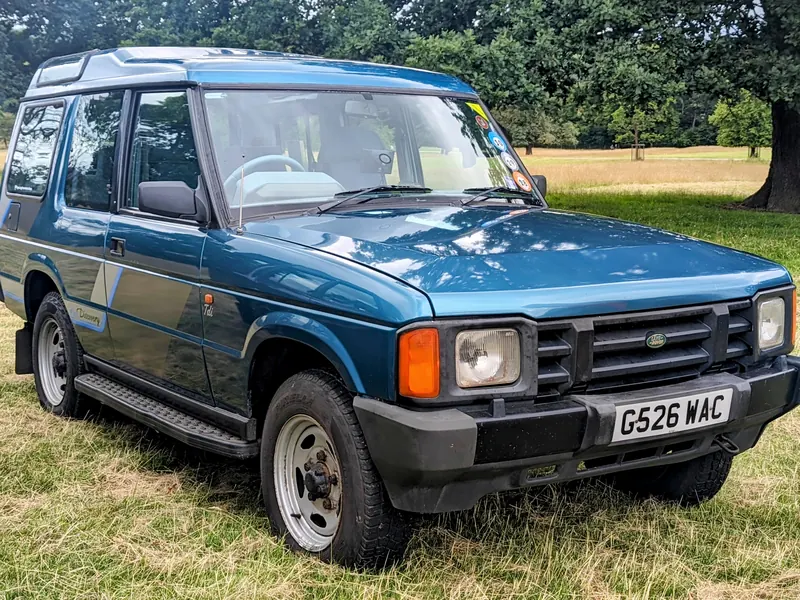
By the late 1980s there was a gap between the Land Rover and the Range Rover. The Discovery, developed under the code-name Project Jay, was built to plug it, and it was unveiled at the 1989 Frankfurt Motor Show.
It was based on the Range Rover, using the same chassis, suspension and four-wheel-drive system, and it was built on a tight budget. Its interior had design input from the English designer Jasper Conran.
The Discovery changed what the name meant. Until then 'Land Rover' had been the name of one vehicle; now it was the name of a marque, so in 1990 the Ninety and One Ten became the Defender 90, Defender 110 and Defender 130.
A 1989 Land Rover DiscoveryCalreyn88 · CC BY-SA 4.0
1948 – today
Who owned Land Rover?
Land Rover started as a product line inside one car maker and has changed hands many times since.
1948
Rover Company
Land Rover begins as a vehicle made by the Rover Company. Spencer Wilks is managing director, and his brother Maurice oversees the engineering.
1967
Leyland Motor Corporation
Leyland takes over Rover, and Land Rover goes with it.
1968
British Leyland
Leyland merges with British Motor Holdings. Land Rover sits in the Rover-Triumph division, and the British government becomes the major shareholder in 1975.
1978
Land Rover Limited
A separate Land Rover company is formed under British Leyland, for the first time.
1986
Rover Group
BL plc is renamed Rover Group plc.
1988
British Aerospace
Rover Group is privatised and becomes part of British Aerospace. The Discovery follows in 1989.
1994
BMW
BMW takes over Rover Group, Land Rover included, on 31 January. The Freelander arrives in 1997.
2000
Ford
BMW breaks up Rover Group and sells Land Rover to Ford for £1.8 billion.
2008
Tata Motors
Tata completes its £1.7 billion purchase of Jaguar and Land Rover from Ford on 2 June. The deal includes the rights to the Daimler, Lanchester and Rover names.
2013
Jaguar Land Rover
On 1 January, Land Rover and Jaguar Cars stop being separate vehicle-making entities, and Jaguar Cars Limited is renamed Jaguar Land Rover Limited.
2016
2015 – 2020
The Defender bows out, and returns
In 2015, as production of the Defender entered its final phase, Land Rover drew the Defender's outline in the sand at Red Wharf Bay, where the story began. It was 1 km across, made by a fleet of six Land Rovers towing farm harrows, and finished with just minutes to spare before the incoming tide erased it.
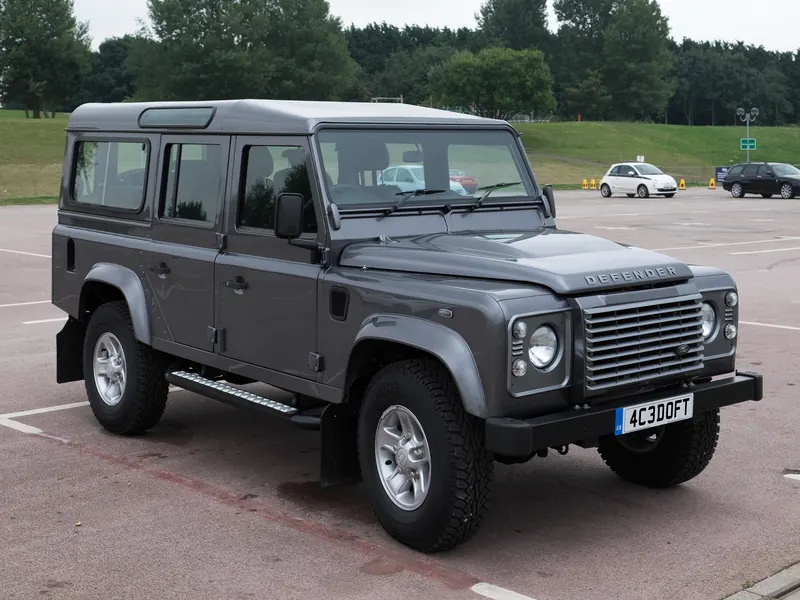
After a continuous run of 67 years, production ended on 29 January 2016. The last Defender, a soft-top 90, rolled off the Solihull line at 9:22 that Friday, wearing the number plate H166 HUE: a nod to HUE 166, the first pre-production Land Rover. It was the 2,016,933rd Defender built.
The successor was unveiled on 10 September 2019 at the Frankfurt Motor Show, the first all-new Defender since 1983. It swaps the old body-on-chassis construction and rigid axles for integrated bodywork and independent suspension, and went into production for the 2020 model year.
A 2016 Land Rover Defender 110 Station WagonDeFacto · CC BY-SA 4.0
1949
1949 – today
Land Rover in Australia
The first Land Rovers arrived in Australia in October 1949, just as the Snowy Mountains Authority realised it needed a robust, go-anywhere vehicle for the Snowy Hydro Scheme. By the late 1950s there were more than 300 in the Snowy region, and over the 15 years from 1951 to 1966 more than 715 were on the scheme's fleet, counting private contractors.
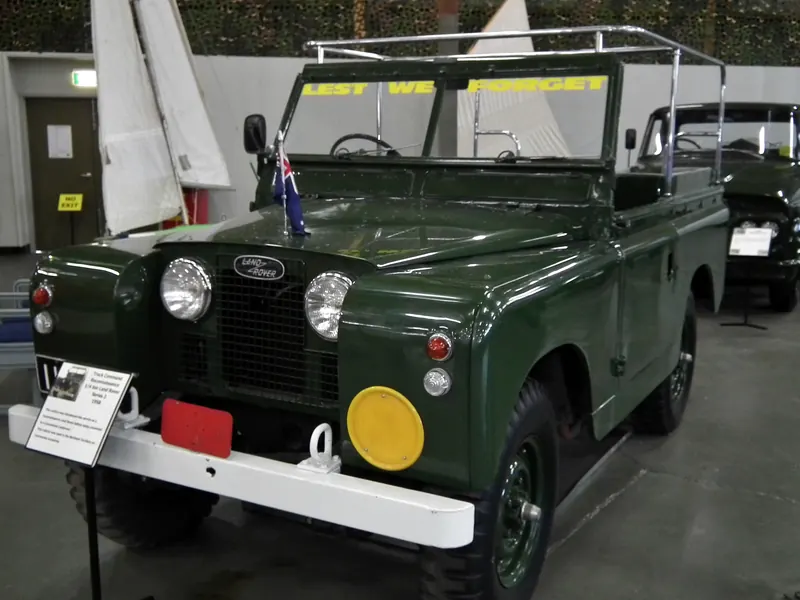
Land Rovers were assembled here from kits shipped from Solihull, including at Pressed Metal Corporation's 22-acre plant at Enfield, west of Sydney. In 1958 the Australian Government commissioned six ceremonial Land Rovers for royal and dignitary visits, assembled in Sydney from components supplied by Land Rover. They were used for parades during the Queen's 1963 visit, and two now stand in the Army museum at Bandiana, Victoria.
In the 1980s Land Rover's Australian arm built the Perentie for the Army, a 4x4 and 6x6 version of the 110 with an Isuzu diesel. It was made at Moorebank, New South Wales, on a line that one of the people who worked on it called the world's shortest, at 30 feet. In April 1991 the Discovery arrived here, and a Jaguar Land Rover Australia manager has said the original Discovery 'was the resurgence of Land Rover in Australia'.
A 1958 ceremonial Land Rover at the Australian Army museum, Bandiana, Victoriasv1ambo · CC BY 2.0
Myth or fact?
Three things people get wrong
Open a card for the fact.
MythThe first Land Rover was called the Series I.Tap for the fact
Fact
Originally these vehicles were simply called the Land Rover. The 'Series' name was added later, once Land Rover had become established as a brand, and it is what is known as a retronym.
MythThe Perentie was just a military Defender.Tap for the fact
Fact
It is commonly thought to be, but the Perentie arrived in 1987, three years before the Defender was named. Based on the 110, it was built in Australia with a galvanised chassis, an Isuzu diesel engine and the spare wheel moved under the load area.
MythThe Td5 diesel was a BMW engine.Tap for the fact
Fact
BMW owned Land Rover from 1994 to 2000, but the Td5 is often mistakenly attributed to it. It was derived from a Rover L-series passenger car engine and developed further by Land Rover.
Quick quiz
Guess the year
When was the first Range Rover released?
17 June 1970, as a two-door. The original Land Rover is much older, from 1948.
When was the Discovery unveiled?
1989, at the Frankfurt Motor Show, after being developed under the code-name Project Jay.
When did the last original Defender leave the Solihull line?
29 January 2016, after a continuous run of 67 years.
By the numbers
Land Rover in four figures
1948
the Land Rover is launched at the Amsterdam Motor Show
1,000,000
Land Rovers built by 1976
2,016,933
the number of the last Defender, built in January 2016
30 feet
the length of the Army Perentie production line at Moorebank