

Hyundai

Cars came later: the motor company was set up in 1967 and began by assembling Ford Cortinas under licence.

2 cars

Filter & Sort

Stock list updated 5 hours ago

Make / Model
Price
–
Year / KMs
–
More Filters

Body

Drive

Fuel

Seats

Cylinders

Paint

Lifestyle

Origin

Discounts

SortJust Arrived (Latest)
Reset all filters
2021 Hyundai i20 BC3.V1 MY22 N Hatchback 5dr Man 6sp 1.6T – #1008
2021 Hyundai i20
$26,800 $27,200
Coming soon
In Workshop
2014 Hyundai Veloster
270,000 km

Seoul · Ulsan · Turin · Perth

The Hyundai story

From a repair shop in Seoul to a dealership in Perth: more than eighty years, told in five minutes.

1931 – 1947

A repair shop, then roads

Hyundai's founder, Chung Ju-yung, was the oldest child of a farming family, born in a village in what is now North Korea. He decided to look for opportunities, left home three times, and on one attempt paid for a train ticket to Seoul by selling one of his father's cows.

In 1941 he started a car repair shop in Seoul, his first contact with the motor trade. He later said with pride, "we repaired in only five days what took other companies twenty."

In 1947 he entered the building trade, working as a government contractor that Hyundai's heritage pages call Hyundai Engineering & Construction. Roads were part of the job, and Chung saw where it led: if roads are the country's veins, cars are the blood running through them.
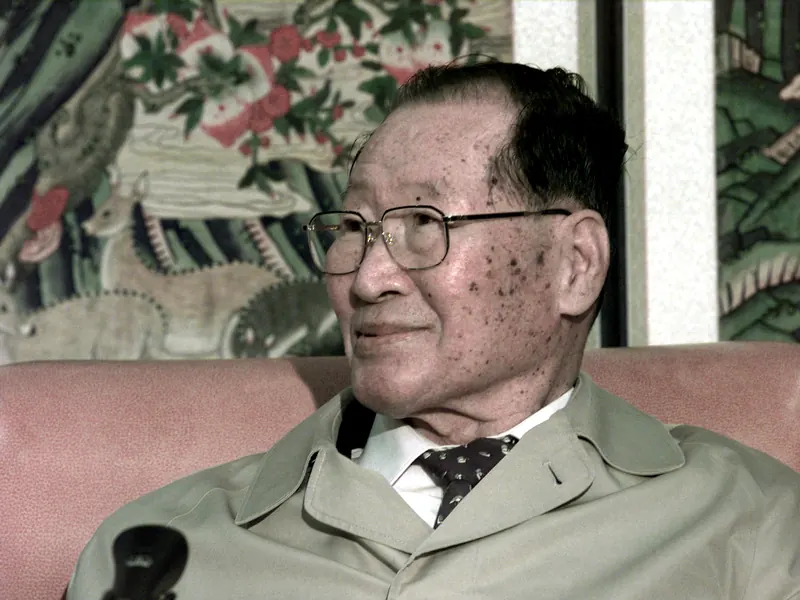
An elderly Chung Ju-yung in glasses and a pale jacket, seated in an armchair and looking off to one side
Chung Ju-yung at Panmunjom, 27 October 1998Technical Sergeant Renee Sitler, US Air Force · Public domain

1967 – 1974

Ford's Cortina, built in Ulsan

Chung Ju-yung founded Hyundai Motor Company in 1967, with his brother, Chung Se-yung. The Ulsan assembly plant was completed in 1968.

The first vehicle assembled at Ulsan was the Cortina, built in cooperation with Ford Motor Company. Hyundai set a record for the quickest time between ground-breaking and full-scale operations for any Ford assembly plant around the world: just under six months.

The Busan bureau chief of the JoongAng Ilbo writes that the Cortina was designed for the paved roads of the developed world, while only about 20 per cent of Korea's roads were paved at the time, and that Cortina taxis frequently broke down. That, he writes, is why Hyundai began developing its own cars.

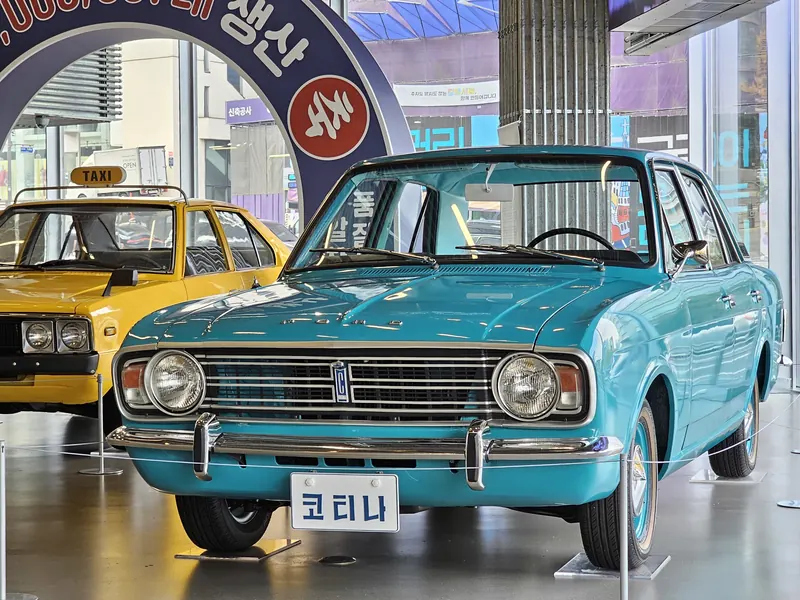
A turquoise Hyundai Cortina saloon with a Korean number plate reading Cortina, on display beside a yellow Pony taxi
A Hyundai Cortina at Hyundai Motorstudio SeoulDamian B Oh · CC BY-SA 4.0

1974 – 1976

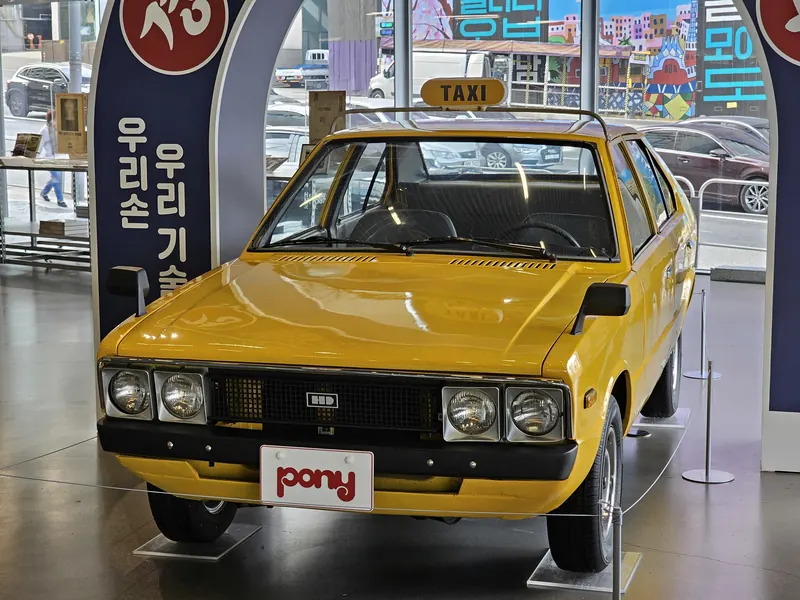
The Pony, a car for the people

In 1974 Hyundai hired George Turnbull, a former managing director of Austin Morris, who brought in European engineers to help create its own car. A Pony coupé concept, styled by Giorgetto Giugiaro, was shown at the Turin Motor Show in October 1974.

The first production Pony, a four-door sedan, was introduced in December 1975. Nicknamed kukmincha, or car for the people, the compact rear-wheel-drive Pony was the first mass-produced South Korean car, with engines and transmissions from Mitsubishi.

Hyundai began exporting the Pony in 1976, to Chile, Argentina, Colombia and Egypt among other markets. The Ulsan Museum says Arirang was the most popular entry in the contest to name the car, but the Arirang lyrics speak of getting sick before even going two miles, so it became the Pony.

A yellow Hyundai Pony taxi with a roof sign and a Pony number plate, in a museum display
A Hyundai Pony taxi at Hyundai Motorstudio SeoulDamian B Oh · CC BY-SA 4.0

1984 – 1991

The Excel goes abroad

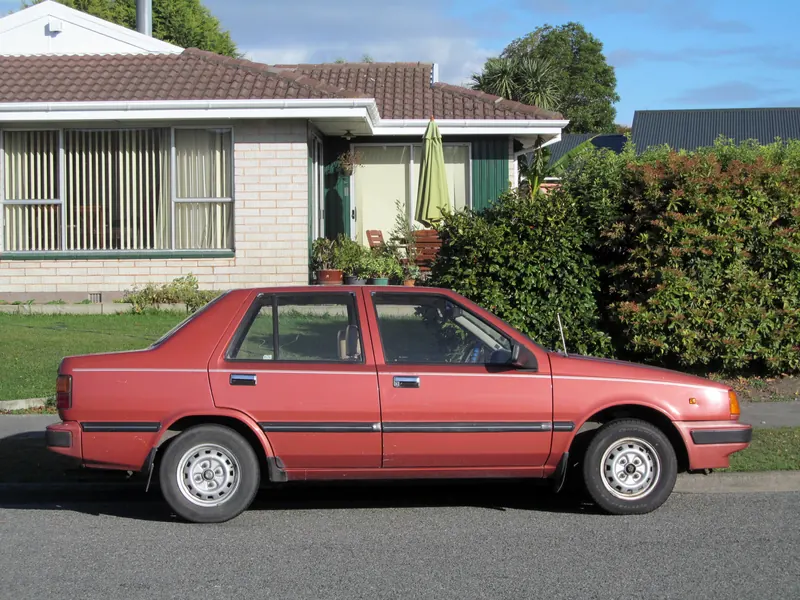
In 1984 Hyundai began exporting the Pony to Canada, but not to the United States, as the Pony would not pass emissions standards there. In 1986 the Pony Excel became the first Hyundai model sold in the United States.

Giugiaro was also behind the Excel, the follow-up to the Pony in 1985. Its bargain pricing helped it sell in big numbers overseas, the United States included.

In 1988 Hyundai began to produce models with its own technology, beginning with the midsize Sonata. In 1991 it developed its first proprietary petrol engine, the four-cylinder Alpha, and its own transmission.

A red 1987 Hyundai Excel GL sedan parked on a suburban street
A 1987 Hyundai Excel GL sedanRiley from Christchurch, New Zealand · CC BY 2.0

1997 – 2004

Kia joins the group

Kia declared bankruptcy in 1997, during the Asian financial crisis. In 1998 Hyundai Motor Company took a controlling 51 per cent stake, in a bid that beat competition from Daewoo.

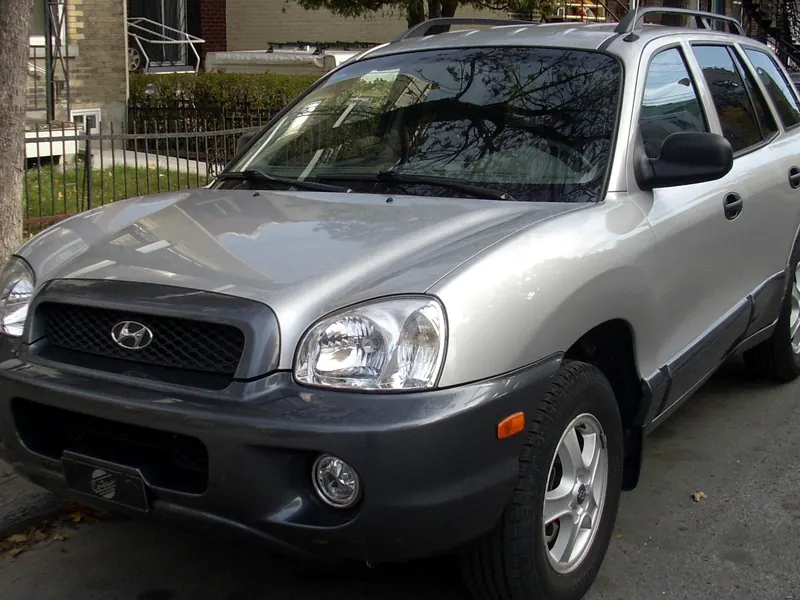
By the turn of the millennium Hyundai had begun to overhaul its image, aiming to become a world-class brand and investing heavily in quality, design and manufacturing. Its first SUV, the Santa Fe, launched in 2000.

Named after the city in New Mexico, the Santa Fe was a hit with American buyers and quickly became Hyundai's best-selling vehicle. The Tucson followed in 2004.

A silver Hyundai Santa Fe SUV with roof rails, parked on a city street
A 2001 – 2004 Hyundai Santa FeBull-Doser · Public domain

1947 – today

Who ran Hyundai?

Three chairmen in nearly sixty years, all from one family, with a few partners along the way.

  1. 1947
    Hyundai Engineering & Construction

    Chung Ju-yung enters the building trade as a government contractor.

  2. 1967
    Hyundai Motor Company

    Founded by Chung Ju-yung with his brother, Chung Se-yung.

  3. 1975
    Chung Se-yung

    President of Hyundai Motor when the first Pony comes off the line in December.

  4. 1998
    Kia

    Hyundai Motor Company takes 51 per cent of Kia during the Asian financial crisis. It owns about a third today.

  5. 1999
    Chung Mong-koo

    Chung Ju-yung hands leadership of Hyundai Motor to his son, who leads it until 2020.

  6. 2000
    DaimlerChrysler

    A strategic alliance begins. DaimlerChrysler sells its stake of about 10 per cent in 2004.

  7. 2001
    Hyundai Group

    Chung Ju-yung dies and the Hyundai Group is dismantled. Hyundai Motor Group is one of the businesses spun off.

  8. 2020
    Chung Eui-sun

    Inaugurated as chairman of Hyundai Motor Group on 14 October. His father becomes honorary chairman.

  9. 2025
    José Muñoz

    The global chief operating officer becomes global co-CEO on 1 January, described as the first foreigner in so senior a role at a giant South Korean conglomerate.

2012 – today

N for Namyang

In 2012 Hyundai set up an R&D team at its home in Namyang, South Korea, aiming at a line of high-performance cars. In 2013 it founded its World Rally Championship team, and in 2014 it hired Albert Biermann, a former vice president of engineering at BMW M, to direct chassis development.

The N stands for two places: Namyang, and the Nürburgring in Germany, where the cars are developed. The i30 N, in 2017, marked the premiere of the range.

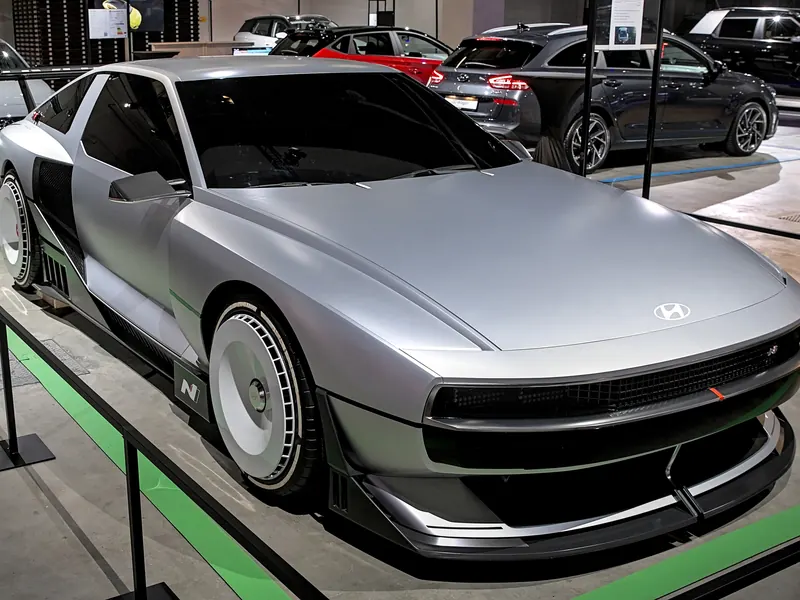
Hyundai says the Pony Coupe, designed by Giugiaro in 1974, ignited the motorsport flame within the company. Almost fifty years later, its design DNA lives on in the N Vision 74, a hydrogen fuel cell hybrid concept. In 2023 the Ioniq 5 N became the first all-electric N model.

A silver Hyundai N Vision 74 concept with a boxy coupé body, white wheel covers and a light bar across its nose, on a show stand
The Hyundai N Vision 74 concept at Auto Zürich 2023Alexander-93 · CC BY-SA 4.0

1986 – today

Hyundai in Australia

In August 1986 the first Excel arrived at a single dealership in Perth. Dealer John Hughes and Alan Bond had secured the Australian distribution rights, and only eight cars sold in the first month. By the end of 1986 the total was 1,756.

The Excel went on to become a cultural phenomenon, and more than 250,000 were sold in Australia. Its drive-away advertising campaign helped popularise nationally advertised drive-away pricing. In some months of 1998 it was the best-selling model in the country.

Hyundai Motor Company Australia was established in 2003 as a wholly owned subsidiary of Hyundai Motor Company. The i30 arrived in 2007, and in 2008 the local team adapted its suspension and steering settings. In August 2026 Hyundai marked forty years in Australia, with more than 2.2 million vehicles sold.

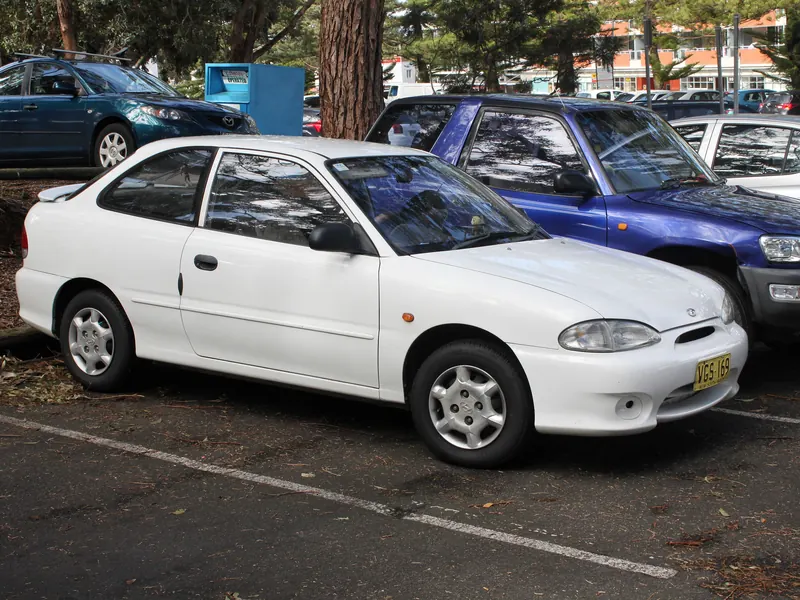
A white 1998 Hyundai Excel three-door hatchback parked in a car park beside a blue four-wheel drive
A 1998 Hyundai Excel GX three-doorJeremy from Sydney, Australia · CC BY 2.0

Myth or fact?

Three things people get wrong

Open a card for the fact.

MythHyundai started out making cars.Tap for the fact
Fact

It began with a car repair shop in 1941 and a building company in 1947. Hyundai Motor Company followed in 1967, and its first cars were Ford Cortinas assembled at Ulsan.

MythThe Pony was the first Korean car.Tap for the fact
Fact

That was the Sibal, hand-built from 1955 by three brothers on a Willys Jeep base, with a body shell made from old oil drums. The Pony, in 1975, was the first mass-produced South Korean car.

MythHyundai and Kia are the same company.Tap for the fact
Fact

They are sister brands. Hyundai Motor Company took 51 per cent of Kia in 1998 and owns about a third of it today.

By the numbers

Hyundai in four figures

1967
Hyundai Motor Company founded
1,001 cows
Chung Ju-yung's gift, shortly before his death, to repay his debt to his father
1,756
Hyundais sold in Australia in 1986, after just eight in the first month
102,004
Hyundais delivered in Australia in 2015, the brand's biggest year here