
Honda

Its CVCC engine of the 1970s met tough new American emissions rules without needing a catalytic converter.

4 cars

Filter & Sort

Stock list updated 5 hours ago

Make / Model
Price
–
Year / KMs
–
More Filters

Body

Drive

Fuel

Seats

Cylinders

Paint

Lifestyle

Origin

Discounts

SortJust Arrived (Latest)
Reset all filters

Hamamatsu · Tokyo · Mexico City · Melbourne

The Honda story

From bicycle engines in Hamamatsu to Grand Prix wins and a business jet: Honda's story, told in five minutes.

1946 – 1949

Engines on bicycles

Soichiro Honda was born in 1906 into a family of blacksmiths who later sold bicycles. At 15 he moved to Tokyo of his own accord to work as a live-in apprentice at Art Shokai, a car service station, and he was later nicknamed the Edison of Hamamatsu for his inventiveness.

After the war he founded the Honda Technical Research Institute in Hamamatsu on 1 September 1946, and began fitting small generator engines, designed to power army radios, to bicycles. The little machines were nicknamed bata-bata for the sound of their exhaust. In 1947 the A-Type engine became the first product to carry the Honda name.

Honda Motor Co., Ltd. was founded on 24 September 1948 with a starting capital of one million yen. In August 1949 it launched the Dream D-Type, its first full motorcycle, and that same month Soichiro met Takeo Fujisawa, who took charge of sales and finance and left Soichiro to look after technology.
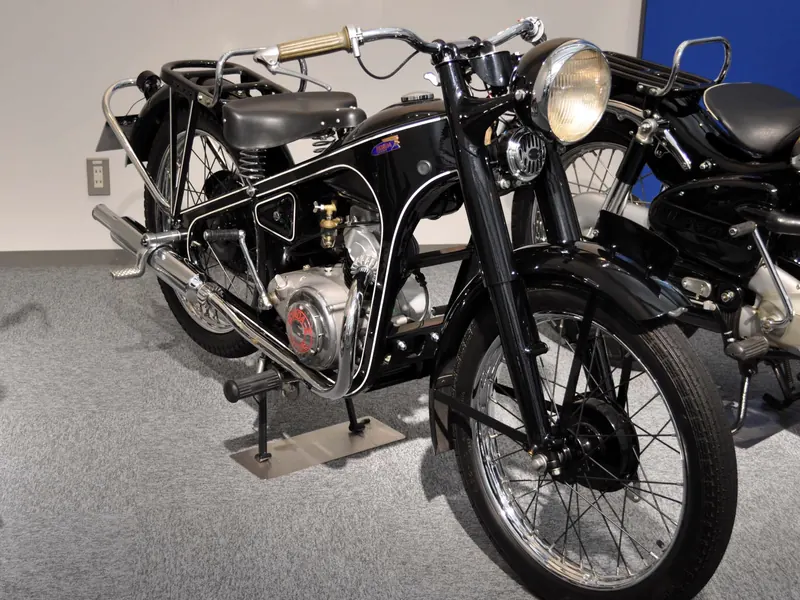
A black Honda Dream E motorcycle with a chrome engine, on display in a museum hall
A Honda Dream E from 1951 at the Honda Collection HallRikita · CC BY-SA 3.0

1956 – 1961

The Super Cub and the TT

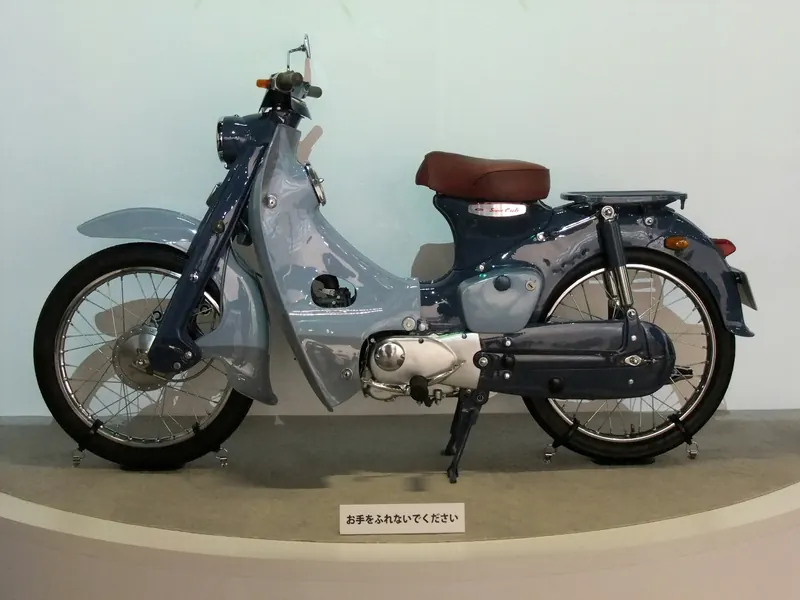
In 1956 Soichiro Honda and Takeo Fujisawa travelled to Europe, where 50 cc mopeds were in widespread use. Two years later Honda launched the Super Cub C100, with a 50 cc four-stroke engine, an automatic centrifugal clutch and three gears.

Fujisawa's brief was simple: make a motorcycle your wife will approve of. So the engine was hidden behind moulded resin panels, and the frame was shaped for easy riding in a skirt. By October 2017 Honda had built 100 million Super Cubs.

Racing was part of the plan too. Honda made its debut at the Isle of Man TT in June 1959 and took the 125 cc team award, then won outright in June 1961, filling the top five places in both the 125 cc and 250 cc classes.

A blue first-generation Honda Super Cub with a brown seat, seen from the side on a display stand
A first-generation Honda Super Cub, 1958Mj-bird · CC BY-SA 3.0

1958 – 1965

Trucks, a sports car and a Grand Prix

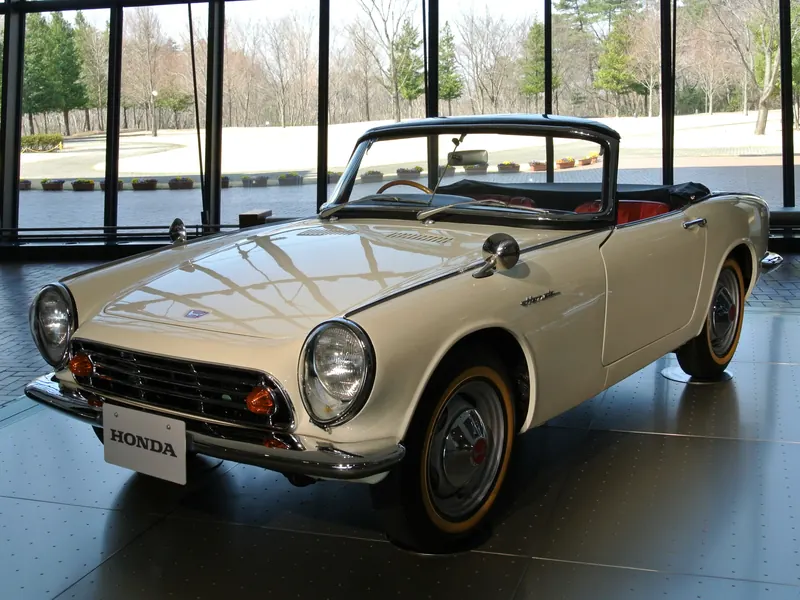
Soichiro Honda had long dreamed of building cars. In 1958, soon after the Super Cub arrived, Honda decided to enter the car business. Soichiro ordered a sports car, while Fujisawa asked for a mini truck, because most demand was for commercial vehicles that Honda could sell through its motorcycle dealers.

The T360 mini truck went on sale in August 1963, and the S500 sports car followed in October. Soichiro wanted the new cars in a vivid red, and he fought a Japanese rule against red car bodies until Honda won approval.

Honda raced as well. It entered Formula One at the German Grand Prix in August 1964, and on 24 October 1965 Richie Ginther won the Mexican Grand Prix after leading every lap. It was Honda's first F1 victory, 15 months after its debut.

A cream Honda S500 roadster with its roof down, on display in a glass-walled museum hall
A Honda S500 in the Honda Collection HallRainmaker47 · CC BY-SA 3.0

1970 – 1978

The Civic and a cleaner engine

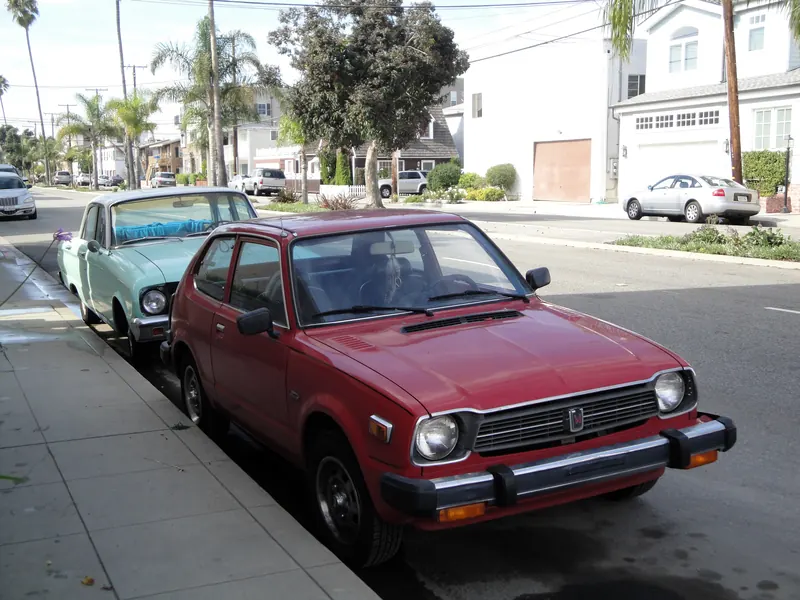
In 1970 the United States passed a Clean Air Act with limits for 1975 so strict that automakers around the world argued they could not be met. Honda set up an air pollution lab, and in October 1972 it unveiled the CVCC engine, which controls combustion in a small extra chamber and needs no catalytic converter.

In December 1972 US testers ran the CVCC through the 1975 limits, using a Nissan Sunny because Honda had no car big enough for it yet, and it became the first engine to clear them. Toyota signed a licence for it on 13 December 1972, and Ford, Chrysler and Isuzu eventually followed.

The Civic itself went on sale in Japan on 12 July 1972 and was an instant hit, and a 1.5 litre Civic CVCC followed in December 1973. In the United States, the EPA rated the Civic CVCC the most fuel-efficient vehicle for four years running, through the 1978 model.

A red Honda Civic CVCC from the 1970s parked at the kerb of a sunny street
A Honda Civic CVCC, photographed in the United States in 2011Greg Gjerdingen from Willmar, USA · CC BY 2.0

1983 – 1990

Titles, VTEC and the NSX

Honda returned to Formula One in 1983, fifteen years after its first campaign ended in 1968, this time in partnership with Williams. A win at the 1984 Dallas Grand Prix showed what the pairing could do, and in 1986 Williams-Honda won nine races and the Constructors' Championship.

For 1988 Honda moved its engines to McLaren, and the McLaren-Honda MP4/4 won 15 of the season's 16 races, losing only at Monza. Ayrton Senna won eight of them and took the drivers' championship.

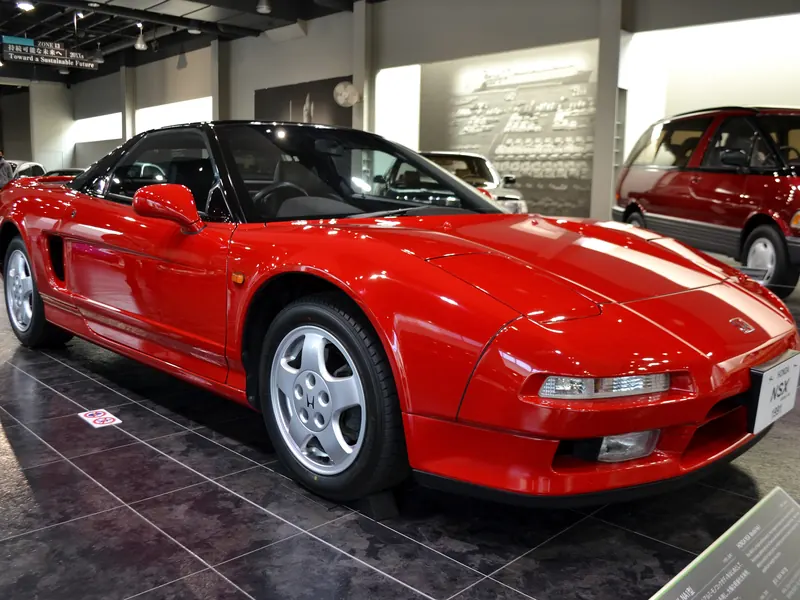
Back on the road, Honda's VTEC system arrived in the 1989 Integra. It changes valve timing and lift to combine high-revving power with normal everyday behaviour, and it was applied to the NSX launched in 1990.

A red first-generation Honda NSX on a museum floor
A first-generation Honda NSX (NA1)先従隗始 · CC0

1948 – today

Who has led Honda?

Honda has had nine presidents since 1948. Here is who held the job, and when.

  1. 1948
    Soichiro Honda

    Founds Honda Motor Co., Ltd. in Hamamatsu on 24 September and leads it with Takeo Fujisawa until 1973.

  2. 1949
    Takeo Fujisawa

    Joins as managing director and takes charge of sales and finance.

  3. 1973
    Kiyoshi Kawashima

    Becomes the second president on 29 October, aged 45. The two founders step down together and do not stay on as chairman.

  4. 1983
    Tadashi Kume

    Becomes the third president. He had led the research behind the CVCC engine.

  5. 1990
    Nobuhiko Kawamoto

    Becomes the fourth president in June, aged 54.

  6. 1998
    Hiroyuki Yoshino

    Becomes the fifth president in June. Honda celebrates its 50th anniversary that October.

  7. 2003
    Takeo Fukui

    Becomes the sixth president in late June. He had started at Honda on the CVCC engine project.

  8. 2009
    Takanobu Ito

    Becomes the seventh president, the first with no prior experience in engine development.

  9. 2015
    Takahiro Hachigo

    Takes over in June as the first president who had not served as president of Honda R&D.

  10. 2021
    Toshihiro Mibe

    Formally appointed the ninth president on 1 April. He sets 2050 targets of zero traffic collision fatalities and carbon neutrality.

1986 – today

Beyond the road

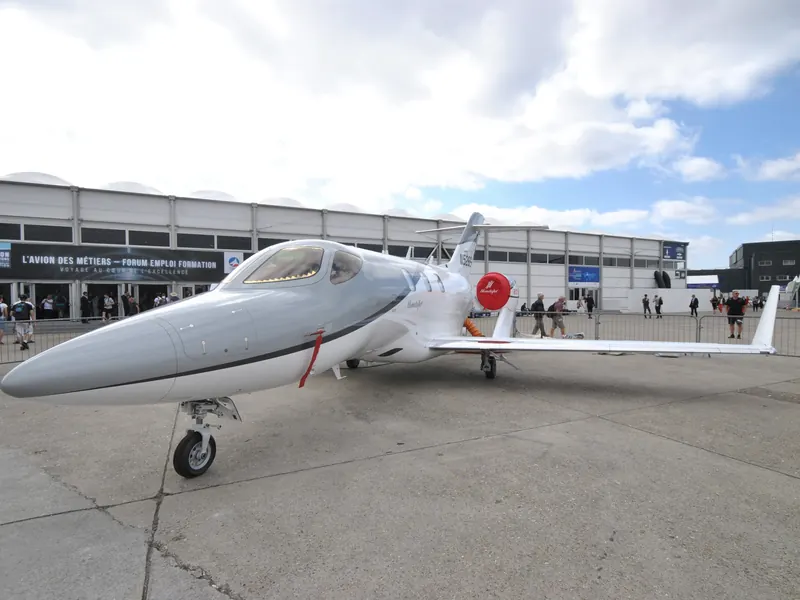
In 1986 Honda began research into small aircraft and jet engines, alongside fuel cells and walking robots. Those seeds later became the HondaJet, fuel cell cars and the ASIMO humanoid robot, and a proof-of-concept HondaJet first flew on 3 December 2003.

Honda gained US type certification for the HondaJet on 8 December 2015, and the first deliveries took place on 23 December. Honda says certification came within 29 years of that first research.

Formula One came back too. After returning to the sport in 2015, Honda powered Max Verstappen to his first world title with Red Bull in 2021. That year new president Toshihiro Mibe also set 2050 targets of zero traffic collision fatalities involving Honda motorcycles and cars, and carbon neutrality for Honda products and activities.

A grey and white HondaJet on the tarmac at an air show, seen from the front left
A HondaJet HA-420 at the 2017 Paris Air ShowMarc Lacoste · CC BY-SA 4.0

1950s – today

Honda in Australia

Honda products were imported and sold around Australia by private companies from the 1950s. In 1969 Honda Motor sent Hidehiko Shiomi to Melbourne, and Honda Australia was formally established on 4 February, a subsidiary set up primarily to sell cars.

Wheels magazine named the Honda Accord its Car of the Year in 1977, the first Japanese car to win it. The four-wheel-steering Prelude won the award in 1987, and the Accord Euro followed in 2008.

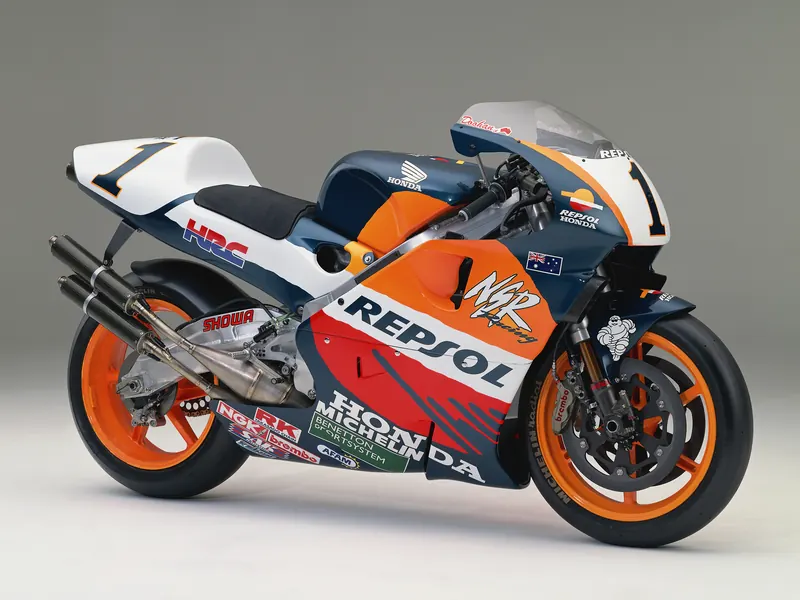
On two wheels, Gold Coast rider Mick Doohan won five 500 cc world championships in a row on Honda motorcycles, from 1994 to 1998, and the first turn at Phillip Island is named after him. By 2019 Honda Australia said it had sold well over five million products here. Among them is the CT110 postie bike, which has helped deliver the mail for generations.

A Repsol Honda NSR500 racing motorcycle carrying the number 1 plate, photographed against a plain studio background
Mick Doohan's 1996 Honda NSR500Box Repsol · CC BY 2.0

Myth or fact?

Three things people get wrong

Open a card for the fact.

MythHonda started out as a car maker.Tap for the fact
Fact

Honda began with bicycle engines in 1946 and built its first full motorcycle in 1949. Its first cars did not go on sale until 1963.

MythThe S500 sports car was Honda's first car.Tap for the fact
Fact

The T360 mini truck went on sale in August 1963, two months before the S500 in October. Soichiro Honda had ordered the sports car, but Takeo Fujisawa asked for the truck.

MythMeeting America's 1975 emissions limits needed a catalytic converter.Tap for the fact
Fact

Honda's CVCC engine became the first to clear the 1975 limits in US government tests in December 1972, with no catalytic converter, by cleaning up combustion inside the engine.

By the numbers

Honda in four figures

100,000,000
Super Cub motorcycles built worldwide by October 2017
1965
Honda's first Formula One win, in Mexico
15 of 16
races won by the McLaren-Honda MP4/4 in 1988
5 titles
in a row for Mick Doohan on a Honda, 1994 to 1998