
Unprecedented demand for the Xiaomi YU7
In mid-2025, Chinese tech giant Xiaomi launched its second electric vehicle, the YU7 SUV, to overwhelming consumer response. According to reports, roughly 200,000 orders came in just three minutes after the launch announcement. Once pricing was revealed (roughly A$54,000 for the base model and up to A$70,300 for the top trim), demand spiked even more: the YU7 logged almost 300,000 pre-orders in the first hour of sales. This far outstrips typical EV launches; for comparison, Xiaomi’s first EV (the SU7 sedan) booked about 89,000 orders in its first 24 hours last year. The early success has already translated into deliveries – Xiaomi reported that it “officially delivered to the first batch of owners” within weeks.
Such figures are record-breaking. Xiaomi itself noted more than 240,000 non-refundable YU7 orders in the first 18 hours, far exceeding market forecasts. Industry analysts are similarly astonished. As The Driven notes, “Few other EV brands have gathered this much fanfare”. The massive order volume has also pushed delivery waiting lists out to nearly a year (over 40–50 weeks for new orders), underlining how strong the demand is.
Why the YU7 struck a chord with buyers
Several factors explain the YU7’s sensational reception. Xiaomi has leveraged its strong brand and loyal customer base to boost EV sales. Its founder, Lei Jun, is a household name in China with about 27 million social media followers, and Xiaomi’s familiar electronics (from phones to tablets) help create trust in its cars. The YU7 was also aggressively priced. At roughly A$54,000 for a rear-wheel-drive model, it is significantly cheaper than competing premium EVs – Lei Jun boasted it was about ¥30,000 cheaper than Tesla’s Model 3 in China. In short, buyers felt they were getting a high-value performance SUV at a bargain price.
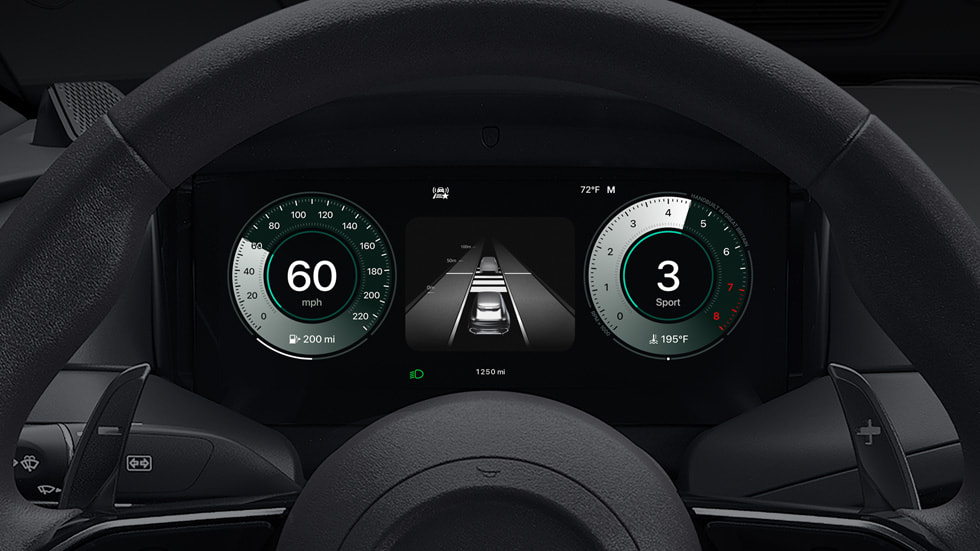
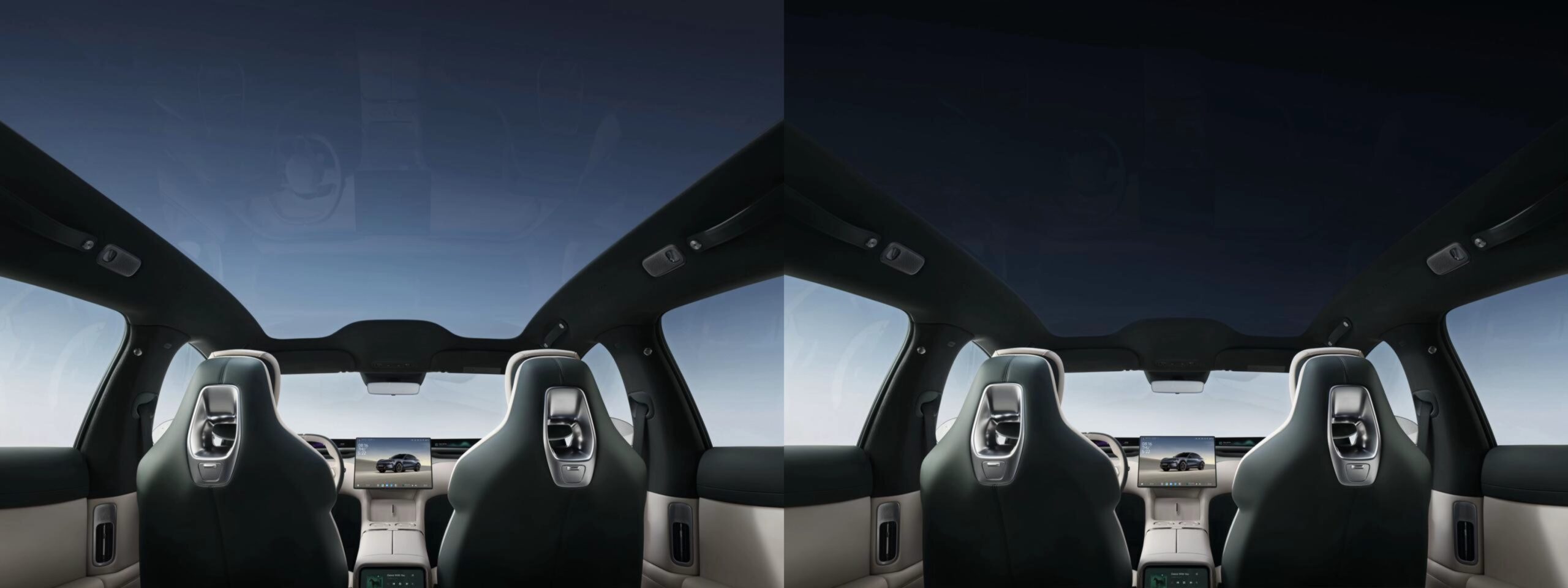
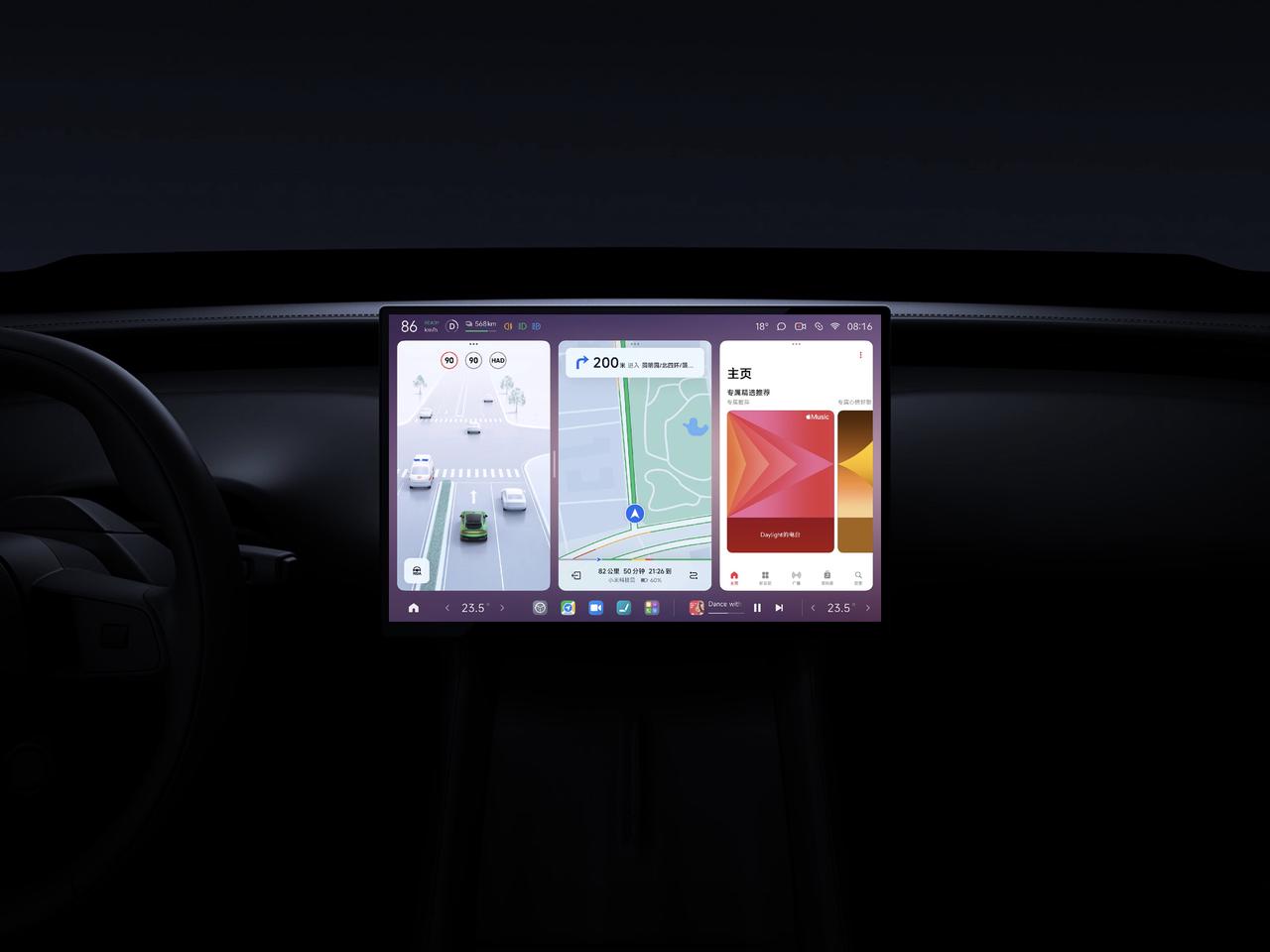
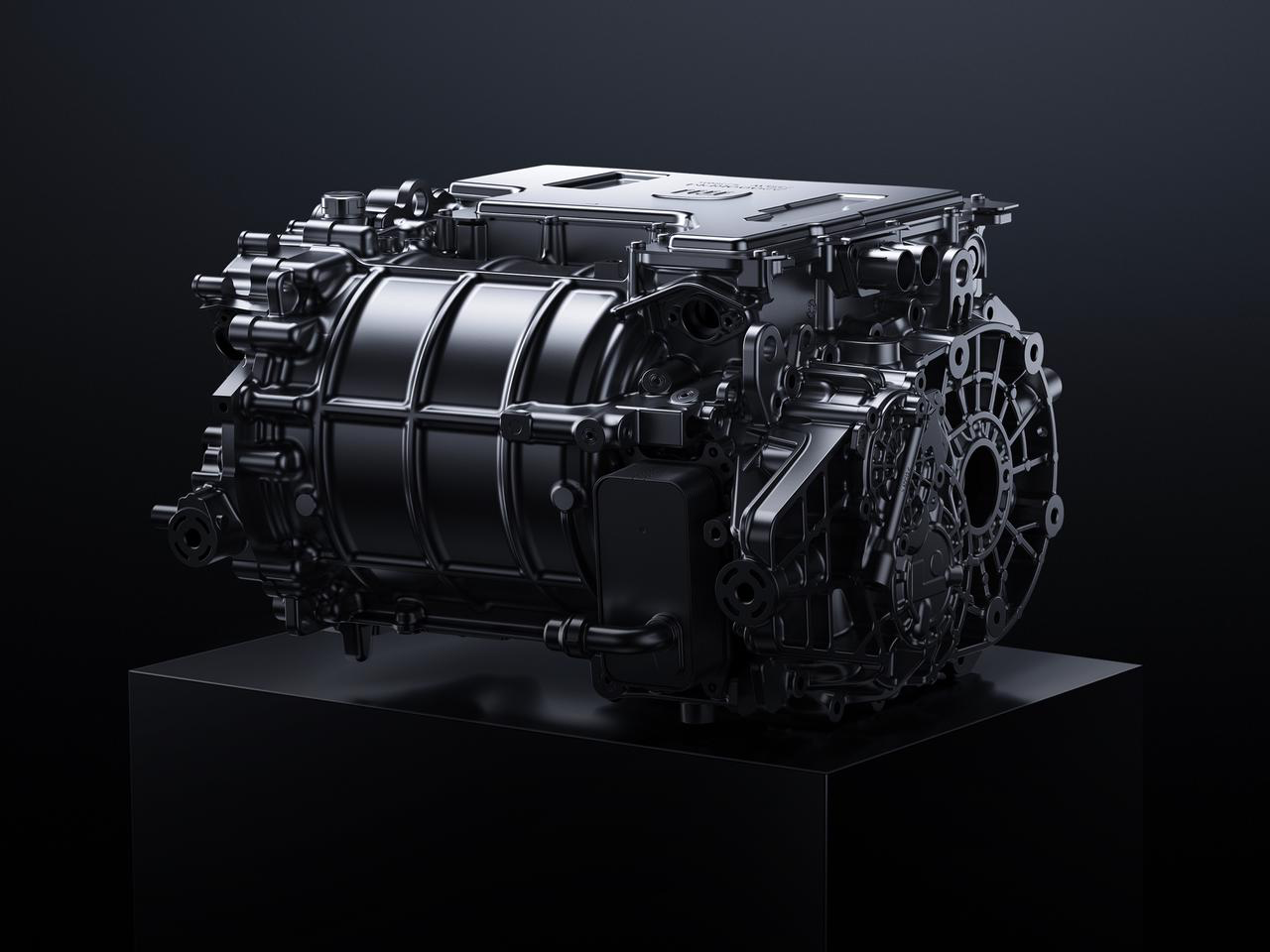
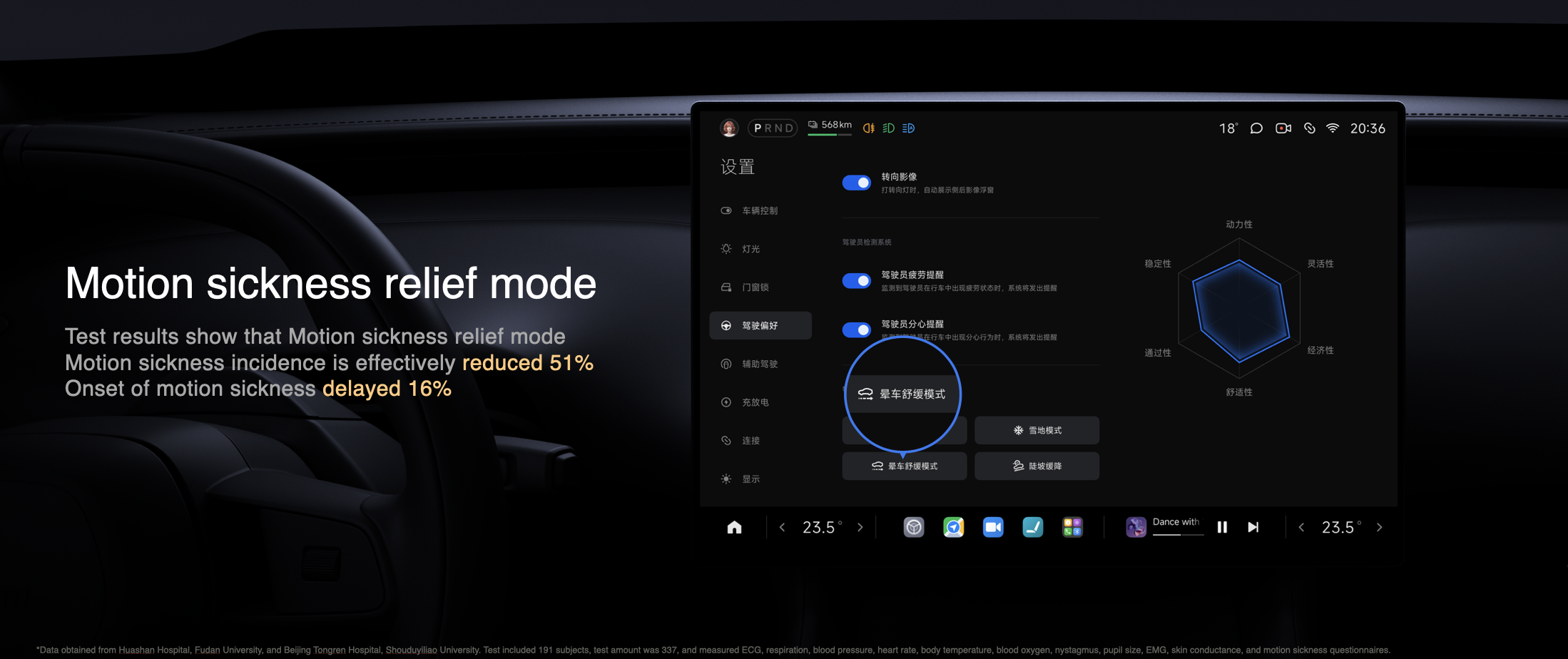
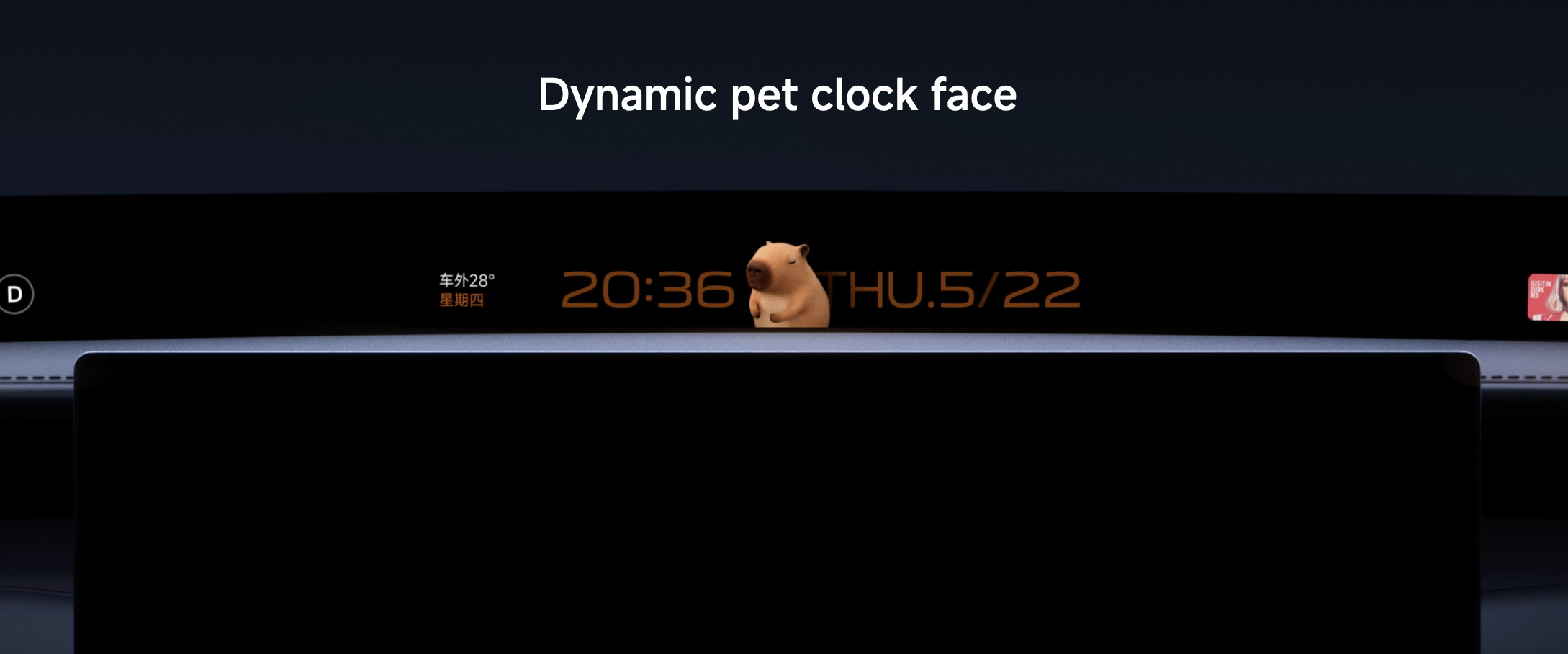
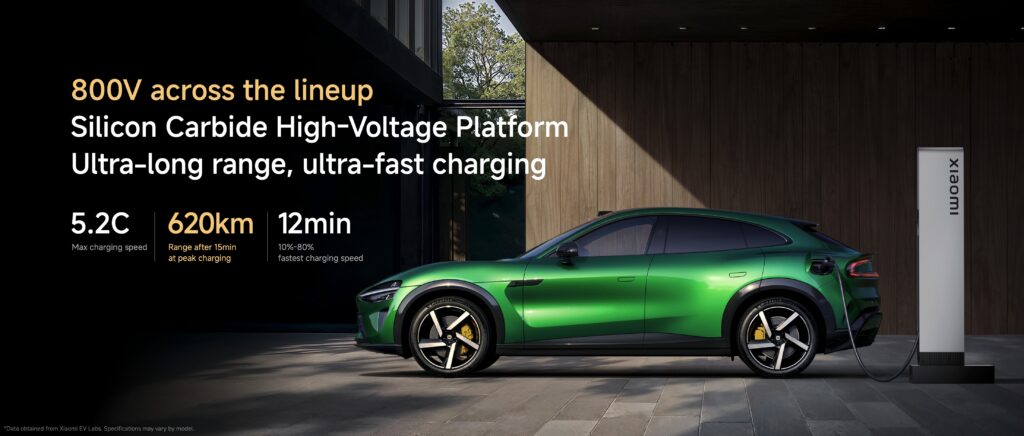
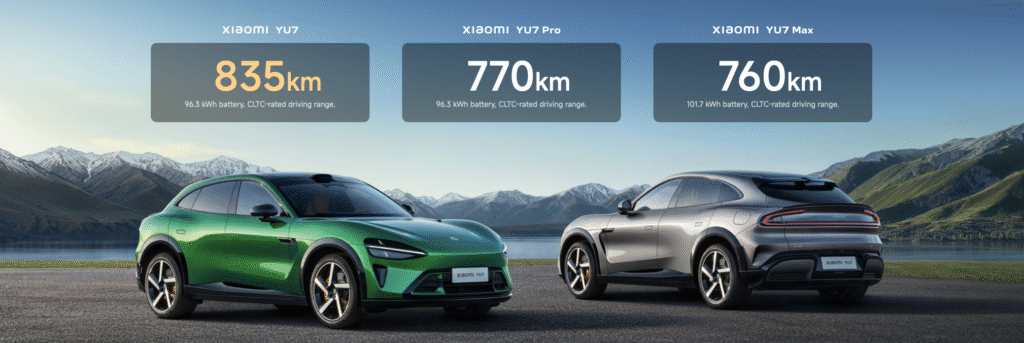
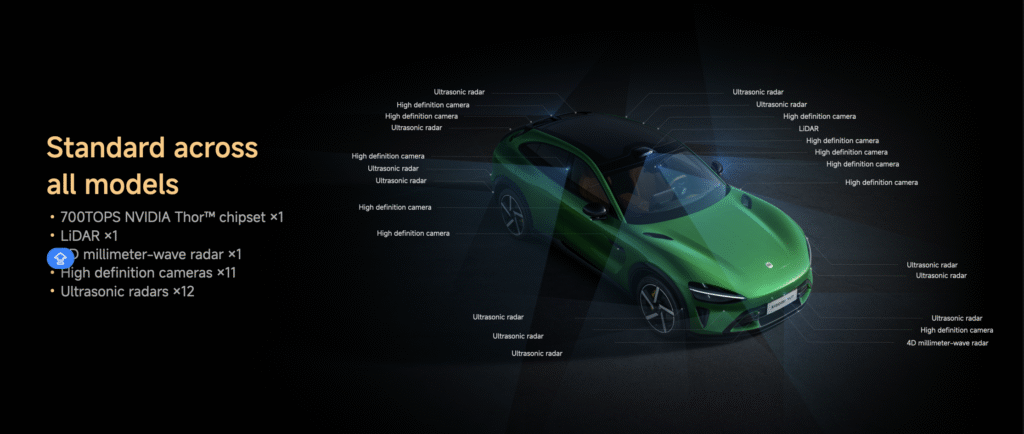
Another key factor is advanced technology and performance. The YU7 is a true electric performance SUV: the top-spec AWD “Max” version puts out 508 kW (690 hp), rocketing from 0–100 km/h in just 3.23 seconds. Its driving range is up to 835 km (CLTC) on a single charge, and it can add hundreds of kilometres of range in minutes of fast charging. The car bristles with high-tech features – for example, it includes a LiDAR-based Level 2+ driver assist system as standard, whereas some rivals (like Tesla) still charge extra for their self-driving software. It also offers an impressive 1.1-metre HyperVision panoramic LED display across the dash, and deep integration with the Apple ecosystem. In short, it leverages Xiaomi’s smartphone and electronics expertise to deliver a premium, tech-rich experience.
Key factors behind the YU7’s popularity include:
-
- Brand strength and fanbase: Xiaomi is already a massive consumer-tech brand in China, and its loyal customer community (bolstered by Lei Jun’s publicity) means early trust in a new EV.
-
- Aggressive pricing: The YU7 undercuts many luxury EV competitors. Lei Jun noted it was around ¥30,000 cheaper than a Tesla Model 3, making it an attractive value proposition.
-
- High performance: With up to 508 kW of power and a sub-3.3-second 0–100 km/h time, the YU7 rivals sports cars in acceleration, appealing to driving enthusiasts.
-
- Cutting-edge tech: Xiaomi’s car comes with high-tech features (LiDAR driving aids, massive 1.1m LED display, etc.) that use the company’s electronics know-how. These features are highly prized by Chinese buyers looking for smart dashboards and connectivity.
-
- Broad appeal: Early data show many unexpected buyers flocking to the YU7. For instance, roughly 52% of YU7 buyers are iPhone users (suggesting Xiaomi’s Apple-friendly tech is drawing them in) and about 30% are female buyers. Xiaomi has even attracted customers who weren’t initially planning to buy a new car this year. Notably, many female buyers see the YU7 as an affordable, stylish alternative to pricier sporty SUVs like the Porsche Macan or BMW X3.
All these elements – familiar brand, value pricing, top-tier performance and tech – combined to make the YU7 a must-have vehicle. As S&P Global observes, the YU7 “demonstrates Xiaomi’s capacity to capture the hearts of China’s young car buyers” in an already crowded EV market.
Implications: a new era of EV competition
Xiaomi’s YU7 phenomenon is more than just a company success – it reflects a broader shift in the EV market. First, it underscores that mass-market consumers (especially younger, tech-oriented buyers) are embracing EVs in large numbers. In Australia, for example, EVs already account for about 12–16% of new car sales in 2025, showing that electricity-powered vehicles are moving rapidly into the mainstream. The YU7’s smash-hit debut is part of this global trend: it proves that when the right product is offered, consumers will rush to electrify.
Second, Xiaomi’s result highlights how tech companies are reshaping the auto industry. Traditionally, cars were made by specialist automakers, but now a smartphone maker is beating long-time car companies at their own game. The YU7 is packed with innovations that reflect Xiaomi’s electronics heritage – for example, its advanced displays and user interfacesspglobal.com. As one analyst puts it, Chinese EV firms now “have the best automotive connected technology in the world”. Xiaomi clearly leveraged that advantage. This trend – tech giants entering EVs – is a hallmark of the new era. Other Chinese startups like BYD and NIO are also aggressively raising the bar with new models, and even legacy automakers are scrambling to keep up.
Finally, these orders signal intensified global competition. Xiaomi’s CEO has already said the company will focus on fulfilling these huge domestic orders and only look at overseas sales from 2027 onwards. But it’s clear that Xiaomi’s ambitions are global. Notably, its first EV sedan (the SU7) has been outselling Tesla’s Model 3 in China on a monthly basis since late 2024. With the YU7’s success, Xiaomi gains more credibility if it eventually exports cars. Industry experts note that once deliveries ramp up, “global expansion” could follow in 2026 or later. In short, we may soon see Xiaomi and other Chinese EVs more widely in Europe, Southeast Asia and beyond (as Reuters reports, Xiaomi plans to consider exports by 2027).
In many ways, the YU7’s debut feels like the start of a new chapter. It tells us that EVs are no longer niche gadgets or the preserve of one or two brands. Instead, we are entering an era where consumer electronics leaders can drive car culture, customers are swarming to EV showrooms in unprecedented numbers, and competition is fierce. As one commentator observes, few EV launches have matched the YU7’s scale, and “with so much riding on this model’s success… [ramping] deliveries makes global expansion easier”
Conclusion: accelerating into the future
The Xiaomi YU7’s astounding pre-order numbers are a wake-up call for the auto industry. This record-breaking demand – 300,000 orders in 60 minutes – shows that the electric-vehicle revolution has accelerated. EVs are hitting the mass market in a big way, and consumers expect high-tech, high-performance vehicles at fair prices. Xiaomi’s entry into the field underscores that new players can quickly become leaders. By combining its electronics expertise with aggressive pricing, Xiaomi has created an EV that even technology lovers and first-time car buyers can’t resist.
Looking ahead, the “new era” signalled by the YU7 is optimistic. It means more innovation (both from Chinese companies like Xiaomi and traditional automakers reacting to them) and wider EV adoption worldwide. Even in Australia we’re seeing EV sales set new records. For consumers, it promises faster rollout of advanced EV models; for the planet, it means cleaner transport. In short, Xiaomi’s YU7 success is not just a one-off headline – it’s a glimpse of the future on the road, driving us all toward a more electric, high-tech automotive world.