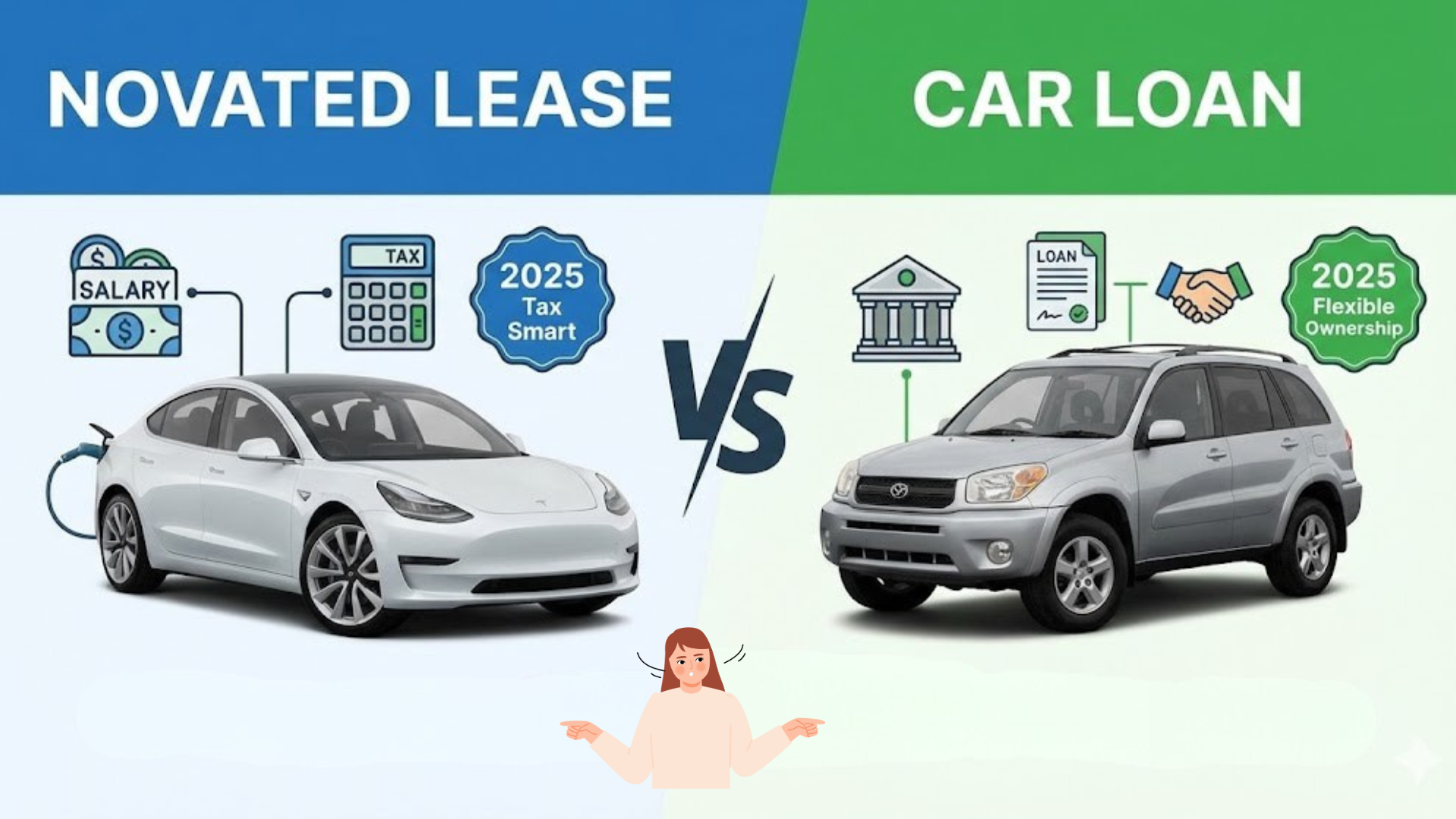
If you’re hunting for a cheap used car in 2025 — whether in Melbourne, Sydney, or anywhere else — you might wonder: is it smarter to go for a novated lease or to grab a traditional car loan? Both paths have their perks, but depending on your work situation, lifestyle, and financial goals, one could fit much better than the other. Let’s walk through what each offers, especially for second‑hand vehicles, and help you decide what works for you.
What is a Novated Lease (and why people like it)
A novated lease is a three‑way finance arrangement involving you, your employer, and a leasing company. The lease payments are salary‑packaged (deducted from pre‑tax income), which can reduce your taxable income — potentially leading to substantial tax savings.
Moreover, you can often bundle running costs — fuel, insurance, registration, servicing, tyres — into your lease repayments. That can simplify budgeting: one regular payment covers nearly everything related to the car.
In recent years, novated leasing has evolved: it’s no longer only about brand‑new vehicles. Many providers now allow used cars (often capped by vehicle age limits) to be novated, which opens up interesting possibilities if you’re buying a used car from, say, a marketplace like Carsales or a local dealer.
Key advantages of a novated lease
-
- Potential tax savings and GST benefits (depending on the vehicle and lease structure).
-
- Fixed budget: combining running costs + repayments into one regular deduction means fewer surprises.
-
- Low or no upfront deposit requirement — good for people who prefer to spread costs.
-
- Flexibility: both new and suitably recent used cars may be eligible.
- Flexibility: both new and suitably recent used cars may be eligible.
However — and it’s a big however — you often don’t own the car until the lease ends and you pay the “residual” or balloon payment. And because you’re tied to your employer (the lease is salary‑packaged), changing jobs or income status may complicate things.
So a novated lease can be a clever, “all-in-one” way to manage a used car — but only if your employment and long-term plans are stable.
What a Car Loan Offers (and why it works for used cars)
The more traditional route: a car loan. Whether you take a new or used car from a site like Carsales or a local dealer, paying with a car loan gives you ownership — from day one, or once repayments finish.
Some of the strengths of loans for used‑car buyers:
-
- Full ownership: you own the car outright once you’ve paid off the loan. You’re free to sell it, modify it or keep it as long as you like — no restrictions.
-
- No involvement from employer or salary‑packaging — solid if you’re self‑employed, freelance, casual or want independence.
-
- Flexibility to make extra repayments — meaning you can pay off the loan sooner if cash flow allows.
-
- Good for cheaper or older used cars: since you’re paying with after-tax dollars, you avoid residual balloon payments, FBT concerns, or restrictions on usage.
- Good for cheaper or older used cars: since you’re paying with after-tax dollars, you avoid residual balloon payments, FBT concerns, or restrictions on usage.
For many buyers of “cheap used cars,” a car loan becomes a straightforward, transparent way to get wheels — with no surprises, no complicated employer agreements, and full control.
Which is Better for Used Cars in 2025?
There’s no one‑size‑fits‑all answer — but here’s a helpful decision‑matrix based on what you value:
| Your situation / priorities | Novated Lease likely works best | Car Loan likely works best |
|---|---|---|
| You work full-time with salary and want predictable, bundled payments (fuel, rego, insurance included) |  |
|
| You want ownership on day one, flexibility to sell or modify | |
|
| You’re buying a fairly inexpensive used car and want to avoid long‑term fees or residual payments | |
|
| You drive a lot (work + personal), and want running costs bundled for simplicity | |
|
| You’re self-employed / contract / gig worker — no employer‑supported lease option | |
|
| You value long-term cost effectiveness and plan to keep the car for many years | (if maintenance is manageable) |
In practical terms: for a mid‑range used car, especially one bought through a second‑hand sales platform or dealership (for example in Melbourne), a car loan often gives you the most freedom and best value over time. On the other hand, if you drive a lot and value convenience — and your employer supports novated leasing — a novated lease can make owning a used car much more manageable.
What to Watch Out For
If you go for a novated lease — keep in mind:
-
- You don’t own the vehicle until the residual (balloon) fee is paid at the end.
-
- Some lease plans may carry extra administration or interest costs. Over time, those can add up — potentially making it more expensive than a loan.
-
- Your employment must support salary packaging. If you change jobs or become self‑employed, you might lose eligibility or face complications.
- Your employment must support salary packaging. If you change jobs or become self‑employed, you might lose eligibility or face complications.
If you choose a car loan — you should factor in all ongoing running costs: insurance, registration, fuel, maintenance. The base loan only covers the purchase price, not costs of ownership.
So, What Should You Do (if you’re after a used car in 2025)?
- First: check your employment status. If you’re salaried and employer offers novated leasing — compare lease quotes carefully (interest rate, residual amount, bundled costs).
- Evaluate how much you drive. If you clock up many kilometres (commute, work + personal), a lease with bundled running costs may save you time and hassle.
- If you prefer ownership, flexibility, and control — especially if buying a “cheap used car” — a classic car loan still often offers the best long-term value.
- Always account for total ownership cost: purchase + interest/fees + running costs (fuel / maintenance / insurance / rego).
- Think about horizon: are you likely to keep the car for many years, or change cars often? Your answer should guide your choice.
Final Thoughts
If you’re browsing through used car listings on Carsales or a local Melbourne dealer — looking for something cheap but reliable — a car loan offers simplicity, ownership, and long-term value.
If instead you prioritise convenience — want bundled running costs, predictable repayments, and salary‑packaging benefits — then a novated lease could make sense, especially if you drive often and your employer supports it.
In 2025, with interest rates and vehicle costs still unpredictable, making an informed choice — rather than jumping at the “pre‑tax savings” headline — is more important than ever. Whichever route you choose, make sure it fits your lifestyle, finances, and long-term plans.